
Last updated November 24, 2026
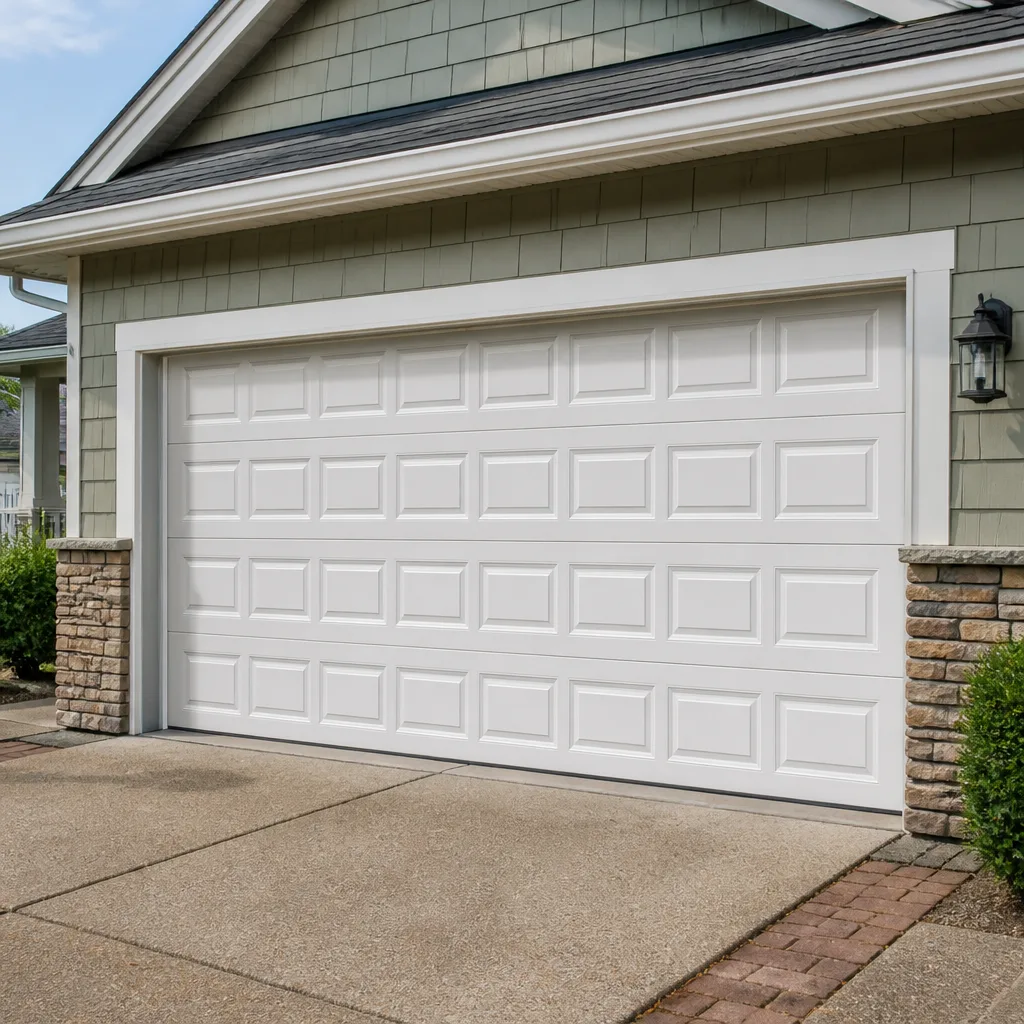 Raised-panel steel
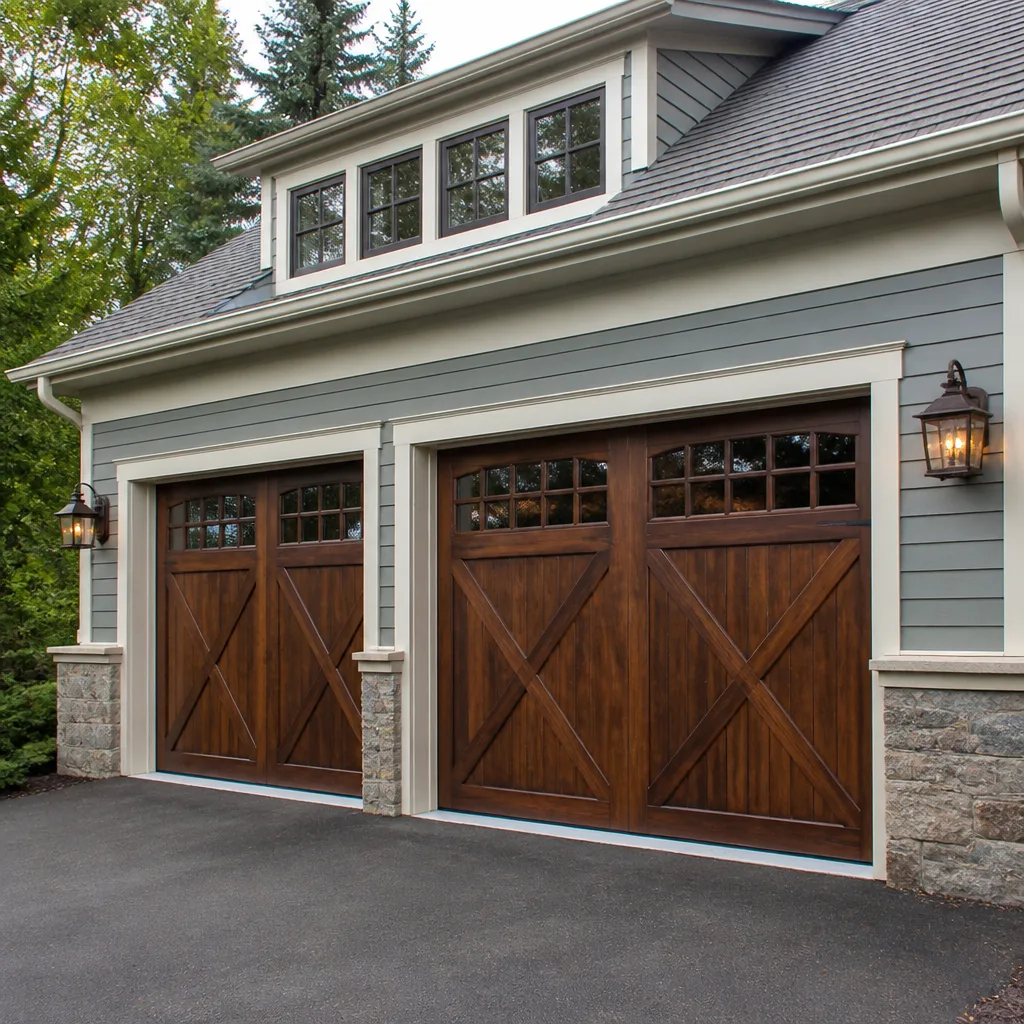 Carriage house
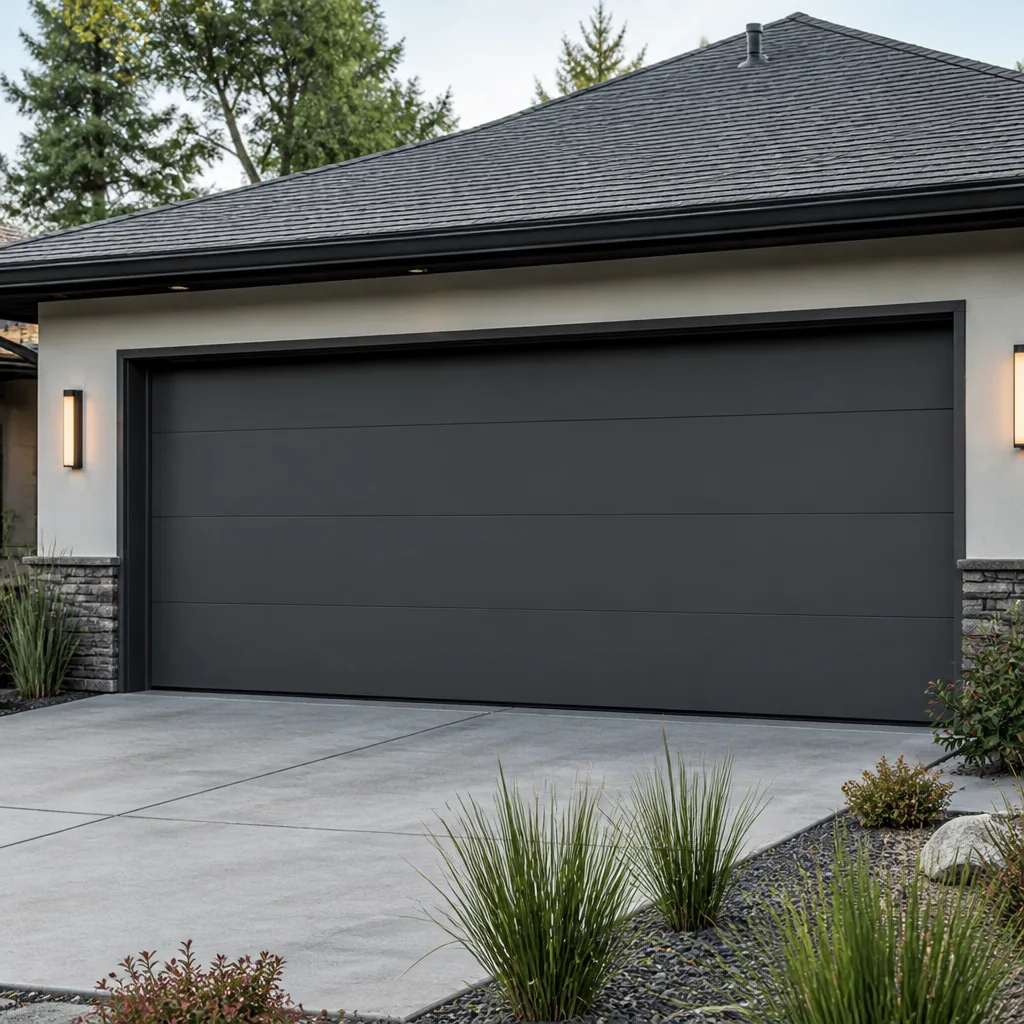 Modern flush
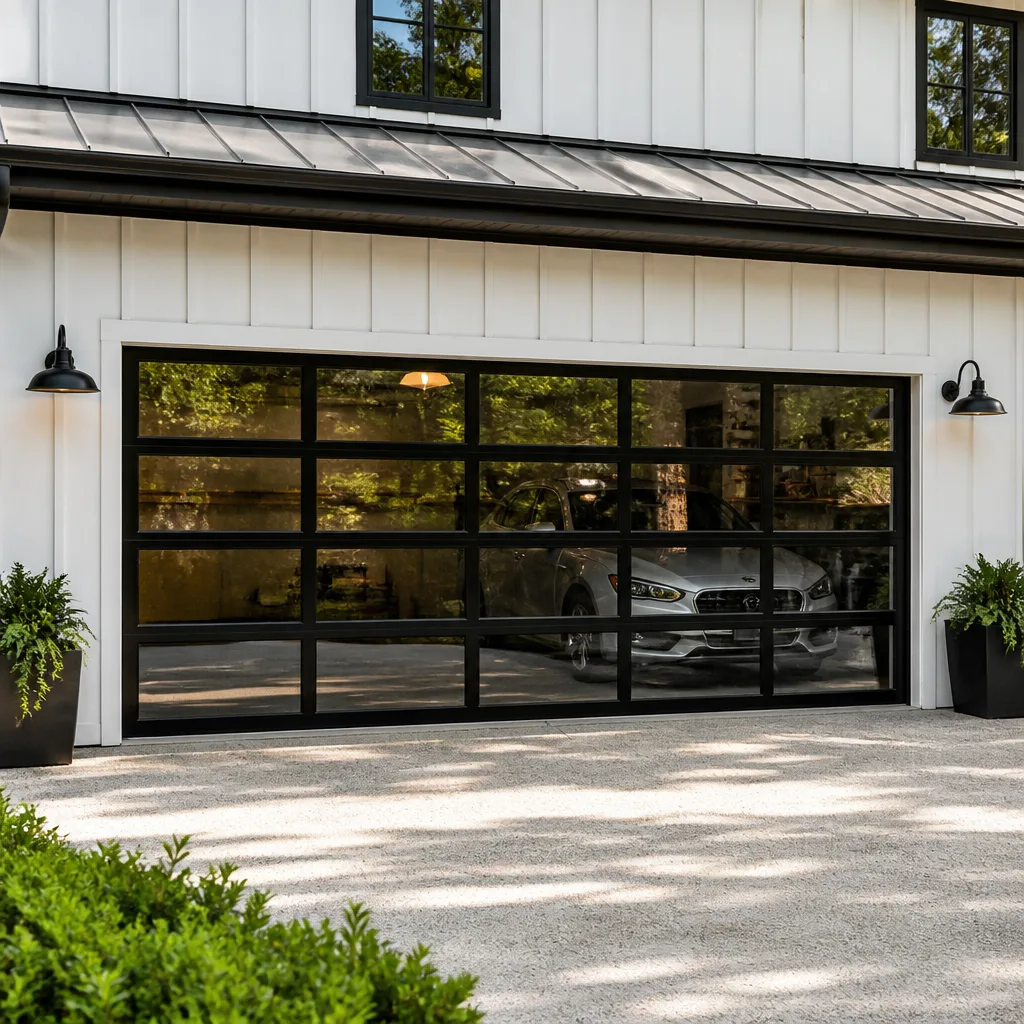 Full-view glass
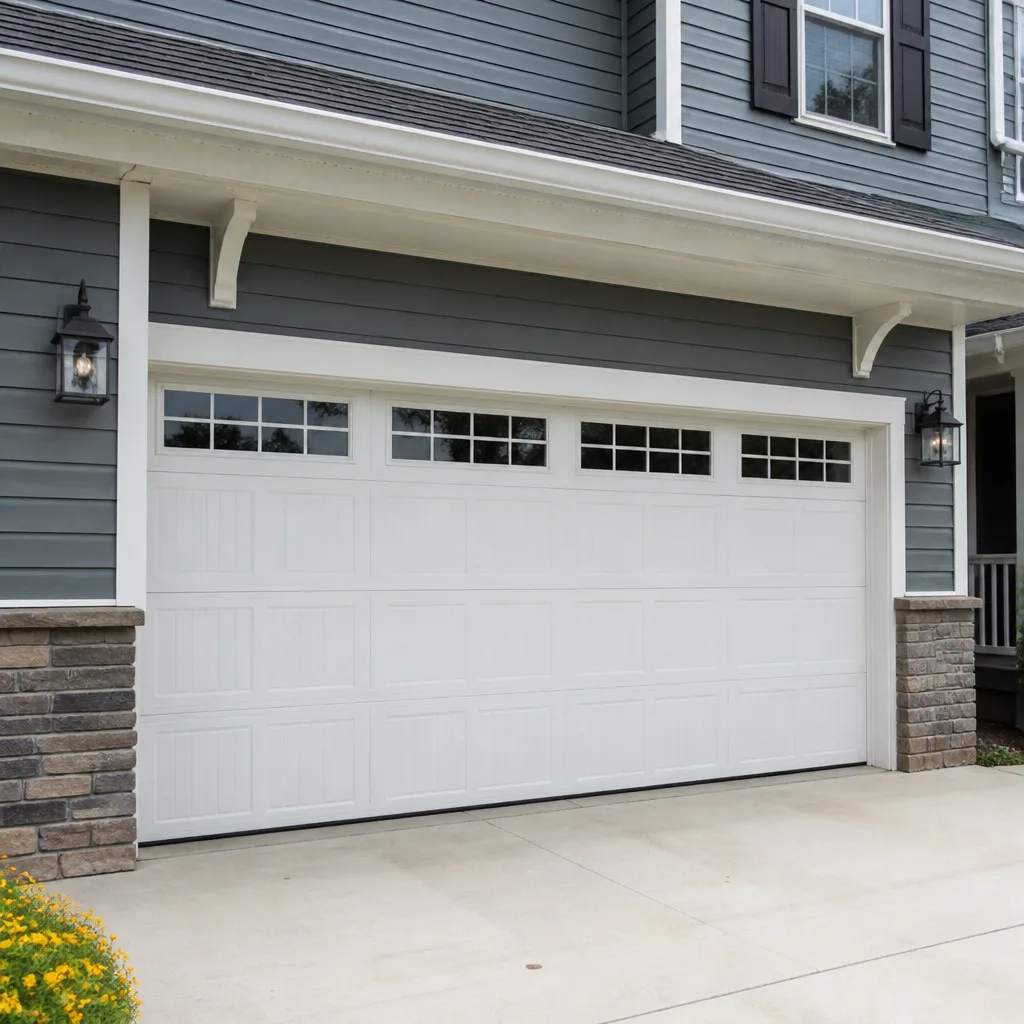 LiftMaster openers
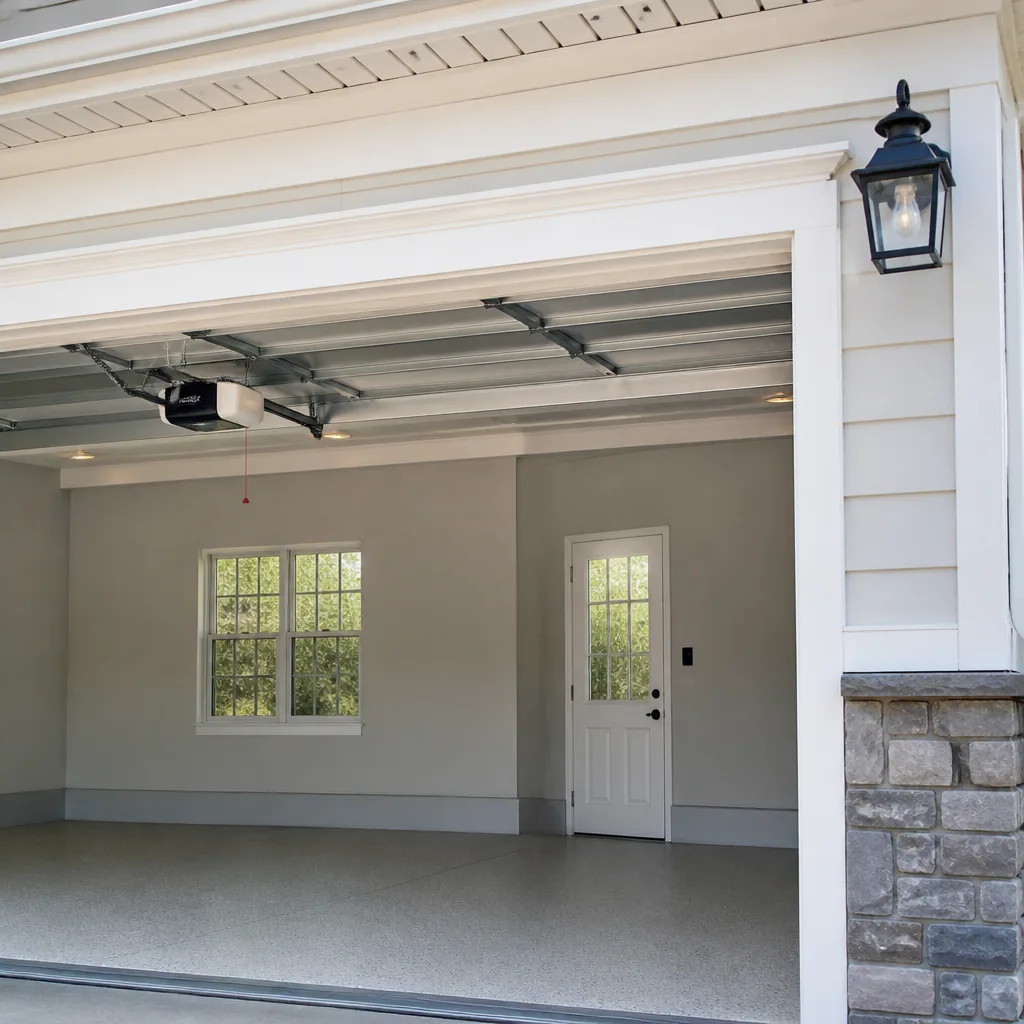 Chamberlain openers
Full 25-point door and opener safety check with every visit - springs, cables, rollers, tracks, and your LiftMaster or Chamberlain opener included
You get a price before we start. It does not change when the pro arrives.
Get your free estimateThe Complete Guide to Garage Doors in Ridgewood
Most garages in Ridgewood were built before automatic openers existed. That single fact changes almost everything about buying, sizing, and repairing a garage door here, and it’s the piece of context that most “just pick a door” advice skips entirely. Before you choose a style or a color or an opener brand, you have to answer three structural questions: how wide the opening actually is, how much headroom there is above the door, and what the door needs to move around on the way up. Get those wrong and even a well-made door won’t fit, won’t open, or won’t last. This guide walks through those questions first, then works through door types, materials, openers, the brands you’ll actually encounter, and the city rules that apply when you replace instead of repair. If you’re new to the subject, start here and read it in order; if you’re troubleshooting something specific, jump to the section you need.
Quick Answer
A garage door in Ridgewood needs to be sized to your specific opening before anything else, because the rowhouse and narrow-lot garages common here often have less width and headroom than suburban doors assume. Sectional and roll-up doors fit most of these configurations; swing-out carriage doors fit only where there’s alley clearance to swing them. For anything structural or for a full replacement, a free on-site measure is the only reliable starting point.
Styles & brands we work with
- Raised-panel steel
- Carriage house
- Modern flush
- Full-view glass
- LiftMaster openers
- Chamberlain openers
Table of Contents
- How Ridgewood’s Rowhouse Lots Change the Rules
- Which Door Types Actually Fit Ridgewood Garages
- How Materials Hold Up in a Dense Urban Setting
- Choosing an Opener for an Older or Connected Home
- The Eight Brands You’ll Encounter Most
- Permits and Code: Repair vs. Replacement
- When to Repair and When to Replace
- What Garage Door Work Typically Costs in Ridgewood
How Ridgewood’s Rowhouse Lots Change the Rules
If you’ve only ever lived in a house with a wide suburban driveway, the measurements that matter in Ridgewood will surprise you. Townhomes and detached garages on narrow lots often have a single-car opening that’s tighter than the label on a standard door, and the space above the opening is frequently shorter than what a high-lift install needs. The building envelope was set long before anyone worried about a garage door’s travel path.
Before you shop for a door, measure these three things carefully, because every door and opener decision downstream depends on them:
- Opening width and height. Measure the clear opening, not the door slab. The frame and trim subtract from what a door can actually cover.
- Headroom. The distance from the top of the opening to the ceiling. A sectional door needs room above to travel up and store flat; a torsion spring setup needs space overhead.
- Backroom and side room. How far back the door can slide, and how much clearance exists on the sides for the vertical track and springs.
These constraints are why a door that’s “standard size” on a manufacturer’s spec sheet can still be wrong for a Ridgewood garage. A low-headroom opening may need a low-profile track or a different lift arrangement. A tight side room may rule out a torsion spring on the usual mounting. And a detached garage on a narrow lot may have an interior wall so close that the door’s opening arc has to be checked against the car parked inside. When we look at a door for the first time, the measurements come first and the style comes second. That’s the order that keeps a job from needing a second visit.
The right approach for an older Ridgewood garage is to bring the actual numbers to the conversation. A free on-site measure gives you those numbers, and it tells you whether you’re a straightforward replacement or one of the trickier configurations. From there, the sizing questions and the door type questions fall into place in the right order. It also means the written estimate you get reflects your garage, not an average garage.
Which Door Types Actually Fit Ridgewood Garages
Three door types dominate here, and each fits a different set of the local configurations. Knowing which one your garage can take narrows everything else.
Sectional doors are the most common choice for a reason. Panels stack upward and store flat under the ceiling, so they suit garages with decent headroom and a normal amount of space behind the opening. On a Ridgewood rowhouse garage with a standard ceiling, a sectional door is usually the cleanest fit. The panels come in a wide range of styles, and if a single panel gets damaged, you can often replace just that section rather than the whole door. That modularity matters in a dense neighborhood where a car or a ladder can nick a panel without wrecking the entire door.
Roll-up doors coil into a compact roll above the opening rather than storing flat panels. They’re the fix for garages where headroom is short and a sectional door would have nowhere to go. They’re also practical where the space behind the door is limited, since they don’t need the door to sweep back into the garage. The trade-off is usually less insulation and a more utilitarian look, which matters more on some properties than others.
Swing-out carriage doors look the part on older and historic homes, but they’re the least flexible fit in Ridgewood. They need clear room on the outside to swing open, which is a genuine problem on lots where a garage faces a narrow alley or sits close to a fence or neighboring structure. If the door swings into a driveway that a car is parked in, it doesn’t work. Where there’s clearance, they’re a strong match for the older housing stock; where there isn’t, a sectional or a carriage-style sectional gives you the look without the swing.
The practical rule: check headroom and backroom first, then look at door types that survive those limits, then pick the style you want from within that group. Choosing a style first and discovering it won’t fit is the most expensive way to buy a garage door in Ridgewood.
How Materials Hold Up in a Dense Urban Setting
A garage door in Ridgewood lives in a harder environment than one on an open suburban lot. Temperature swings between a summer afternoon and a cold night move steel and wood panels in ways that show up at the joints and hinges. Traffic on the nearby corridors throws fine grit and dust that gets into tracks and rollers. And doors that face an alley take impacts and abuse a driveway-facing door never sees. None of that is unique to this neighborhood, but together it steers the material choice.
Here’s how the main options behave in these conditions:
- Steel: The most common choice, and a good one. Steel resists the grit and temperature movement well, holds paint, and costs less than wood. In a neighborhood where a door faces an alley, a steel door also takes a knock without a dent that reads as structural damage. Look for a galvanized or well-coated finish if the door is exposed.
- Aluminum: Lighter, and it won’t rust, which helps in any damp setting. It’s more prone to denting on a panel that catches a bike or a bin, so it suits a protected garage more than an exposed alley one.
- Wood and composite: Best for the older and historic homes where the look matters. Wood needs more attention to finish over the seasons and can move at the joints as temperatures swing. Composite and steel-backed wood-look options give you the appearance with less upkeep.
- Insulated vs. non-insulated: If you use the garage as a workshop or want to keep the room above or beside it comfortable, an insulated door helps. If it’s pure vehicle storage, the insulation adds less and costs more.
Grit and temperature swing also make maintenance matter more here than in a quiet suburb. Track and roller lubrication, hinge inspection, and keeping the bottom weather seal intact all slow the wear that a busy urban environment accelerates. A door that’s a little noisy in summer is often telling you about a track that needs tightening, not a door that’s failing.
Choosing an Opener for an Older or Connected Home
Ridgewood’s garage stock is split down the middle. Some properties have the original manual setup, or an opener that’s two decades old. Others have been updated with a modern smart opener tied into a phone. The right choice depends on which side of that split your garage sits on, and on whether the ceiling above the door can take the mounting.
For an older home, the practical questions are about compatibility and support. An older Craftsman or Genie opener may still work perfectly and only need a component replaced, in which case a full swap is money you don’t need to spend. If it’s failing and parts are hard to source, a replacement matched to the existing rail and header is straightforward. Opener work is one of the most common calls we get, which is why a dedicated garage door opener repair page exists for the specific failures: a remote that stopped working, a door that reverses on its own, a motor that runs but the door doesn’t move, or a safety sensor knocked out of alignment by a car or a bin.
For a connected household, smart openers from LiftMaster and Chamberlain (MyQ among them) let you open the door from a phone, check that it closed, and give a visitor or delivery access. That integration is genuinely useful on a rowhouse lot where you can’t always see the garage from inside the house. Before committing, though, confirm the opener matches the door’s weight and the garage’s headroom, because a smart opener on the wrong door still opens badly, just with an app.
Whichever way you go, the opener is only as good as the door’s balance. A door that’s slightly out of balance will wear an opener motor faster than a properly balanced one. Balance gets checked before a new opener goes up. If you’re buying a new door and opener together, a full garage door installation project should size the opener to the door and your ceiling, not the other way around. A sound plan puts the door and the opener in the same conversation from the start.
The Eight Brands You’ll Encounter Most
Walk down enough Ridgewood blocks and you’ll see the same handful of manufacturers over and over. That’s actually useful, because it means the parts and expertise needed to fix your door are well known to a specialist. We work on eight of the most widely installed brands in North America: LiftMaster, Chamberlain, Genie, Clopay, Amarr, Wayne Dalton, Craftsman, and Raynor. Knowing all of them means the recommendation follows your door, not whatever a technician happens to stock.
On the door side, Clopay and Amarr cover a wide range from budget to premium, and Wayne Dalton doors turn up on both older homes and newer installs. On the opener side, LiftMaster and Chamberlain handle the smart-home side, while Genie and Craftsman cover a lot of the legacy openers still working in older garages.
What matters in a dense NYC borough is parts availability. A specialist who works these brands regularly can source a replacement panel, a torsion spring sized to the door, a roller, or a specific opener component without an open-ended wait. That’s different from a general handyman guessing at a model. Brand Fluency is also a safety issue on legacy openers: an opener that’s been modified or mismatched is a risk, so the brand and model get checked before any repair begins. If your door carries a brand we list, we can work with it; if it’s something else, we’ll say so honestly rather than take a job we can’t do well.
Permits and Code: Repair vs. Replacement
This is the part of the guide where local rules genuinely differ from what a general article will tell you, and where the details are worth confirming with the city rather than assuming. In New York City, replacing a garage door on a Ridgewood property can trigger Department of Buildings requirements that a straight repair usually does not. The distinction between repair and replacement is the key.
As a working rule:
- Repairs (a spring, a roller, a hinge, an opener component, a single panel) generally fall under maintenance and don’t involve a filing.
- A full door replacement changes the structure of the opening and can cross the line into work that needs a permit from the city’s building department.
- Structural changes (widening an opening, changing the header, adding a new opening) are a separate, larger category of work with their own requirements.
We don’t publish a firm rule about which jobs need a filing, because the answer depends on your property and the scope of the work. The reliable move is to ask the NYC Department of Buildings, or to have the question answered as part of your project planning, before a replacement starts. That’s especially important on a rowhouse or a detached garage on a narrow lot, where the opening and its frame are part of the building’s original structure and a change is more likely to raise questions than a simple swap.
When you’re ready to replace rather than repair, a free on-site measure is the right first step. It gives you the door size and configuration, tells you whether the work is a straightforward replacement or something structural, and lets the permit question be answered against a real scope instead of a guess.
When to Repair and When to Replace
The honest answer is that most garage door problems are repairs, not replacements. A door that won’t close, a spring that broke, an opener that hums but doesn’t move: these are fixable. Replacement makes sense when the door’s structure itself is failing or when the door is so old that parts are no longer available.
Signs that point to repair:
- A single panel is dented or damaged and the rest of the door is sound.
- The spring, roller, hinge, or cable has failed but the panels and track are intact.
- The opener is at fault rather than the door.
- The door is noisy or slightly out of balance but still opens and closes.
Signs that point to replacement:
- Multiple panels are rusted through or structurally damaged.
- The track itself is bent or off its anchors (sometimes a repair, but often a sign the door is tired).
- The door is so old that panels and hardware can’t be sourced.
- You want a different type or material to fit the garage better than the current door does.
For smaller failures, a straightforward garage door repair visit handles the problem and saves the cost of a new door. For a spring that’s snapped, the decision is simpler: that’s a repair, and a safety-critical one. We cover spring failures through a dedicated service, because torsion and extension springs require calibrated tools and a real safety protocol. That’s why a spring failure is a job to hand to a trained technician rather than attempt yourself, and why it’s one we do. Call (855) 692-0594 and we’ll tell you whether you’re looking at a repair or a replacement based on what you describe.
What Garage Door Work Typically Costs in Ridgewood
Garage door pricing depends on your opening, your door, and the parts involved, so any number we give is typical rather than exact. The written estimate sets the final price, and that price is quoted and agreed before any work starts, so there’s no surprise at the end. Here are the ranges that hold for common jobs, at one spring unless a pair is noted:
| Job | Typical cost |
|---|---|
| Single torsion or extension spring replacement | $180 – $340 |
| Matched pair of springs (usually replaced together) | About twice the single-spring range |
| Garage door repair (panel, roller, hinge, cable) | Quoted per job after inspection |
| Opener repair | Quoted per job after inspection |
| Full door installation | Sized and priced after a free measure |
Two points matter more than the exact figure. First, a matched pair is usually replaced together, so a pair costs roughly twice one spring, not one range for both. Second, everything else is priced from an inspection of your actual door, which is why we don’t quote a single number for a job sight unseen. The estimate is free, and the price you agree to is the price you’re billed.
On a Ridgewood rowhouse garage, tight measurements can mean a custom-sized door or a non-standard opener mount, which affects the cost of a replacement. That’s one more reason the free measure comes first: a size you’ve confirmed is a price you can plan around. If you’re weighing a full replacement, our guide to garage door installation covers what a project involves from measure to finish. For a failing door you can still fix, a repair visit usually costs far less than a new door, and we’ll tell you which one your door actually needs. Call (855) 692-0594 for a free estimate.
Common Mistakes to Avoid
- Buying a door before measuring the opening. The “standard” size on a spec sheet can be too wide or too tall for a Ridgewood rowhouse garage. Measure the clear opening, headroom, backroom, and side room first, then shop.
- Ignoring headroom. A sectional door needs room above the opening to store flat. On a low-ceiling garage, a roll-up or a low-profile arrangement is the correct choice, and a standard sectional is the wrong one.
- Replacing an opener to fix a door problem. A door that’s out of balance or binding will wear out a new opener just as fast. Check the door’s balance and hardware before blaming the motor.
- Going DIY on a spring. Torsion and extension springs store a large amount of energy and require calibrated tools. A spring that lets go while you’re working on it can cause serious injury, so this is a job for a trained technician.
- Assuming a repair and a replacement need the same paperwork. A full replacement on a Ridgewood property may involve a city filing where a repair does not. Ask the NYC Department of Buildings before a replacement, not after.
- Skipping lubrication on a busy urban door. Grit and traffic accelerate track and roller wear. Keeping the track and rollers lubricated and the weather seal intact adds years to a door in a dense neighborhood.
- Choosing a swing-out carriage door where there’s no clearance. If the door opens into an alley or a tight driveway with a car parked in it, the swing doesn’t work. A carriage-style sectional gives the look without the obstruction.
See the difference
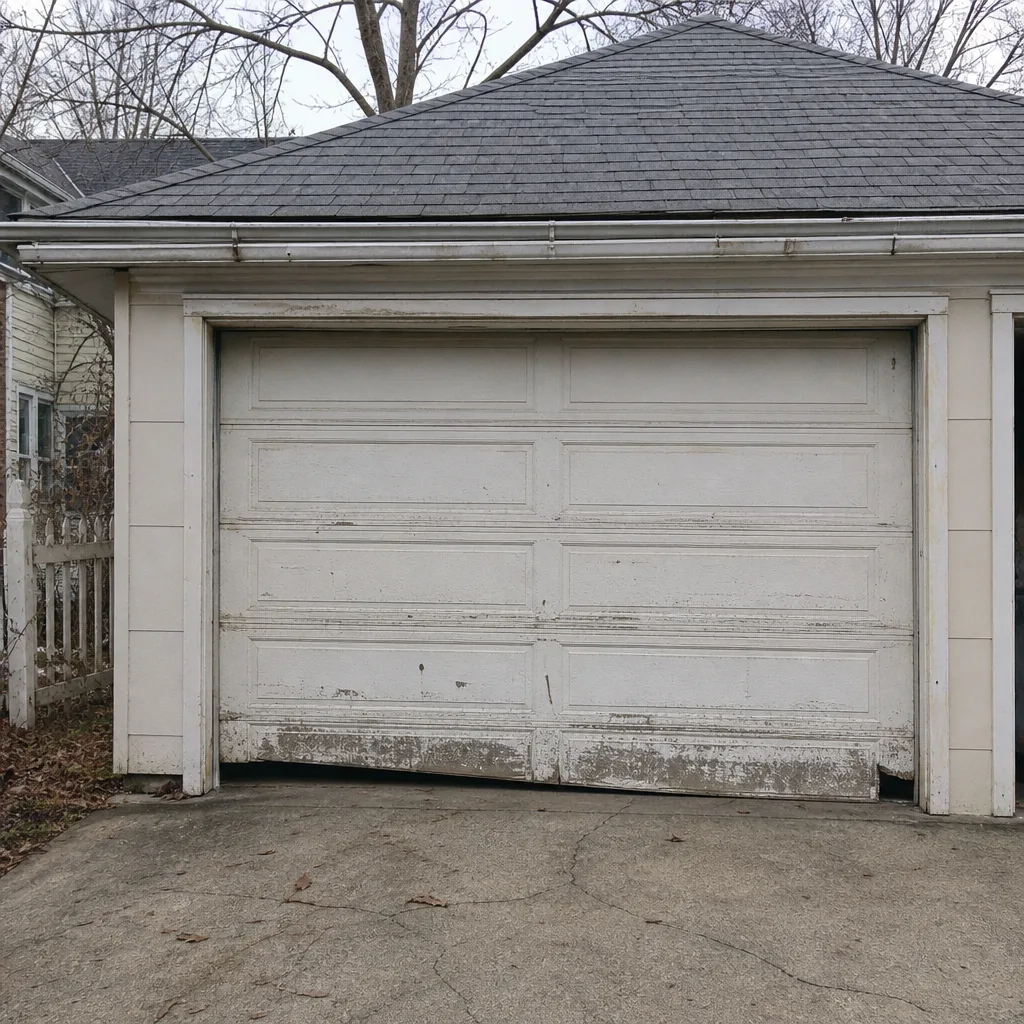 Before
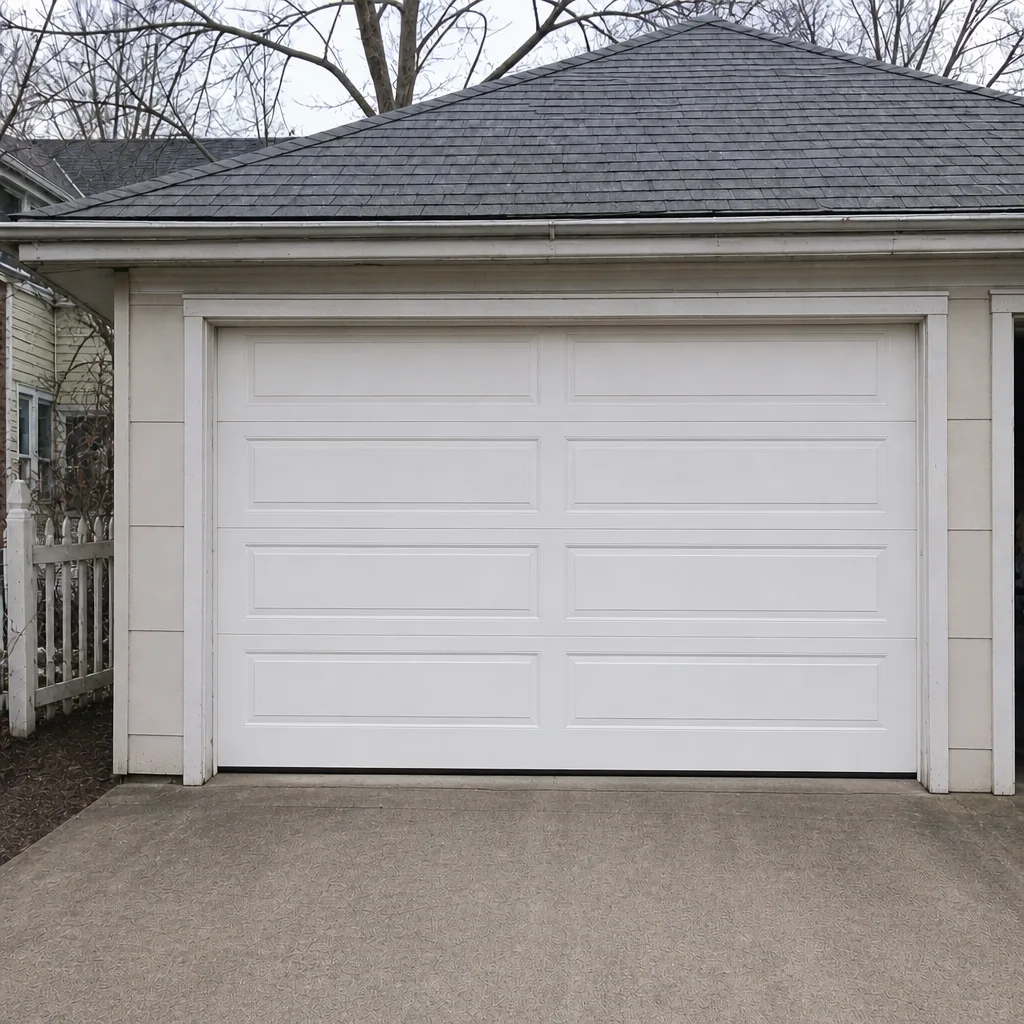 After
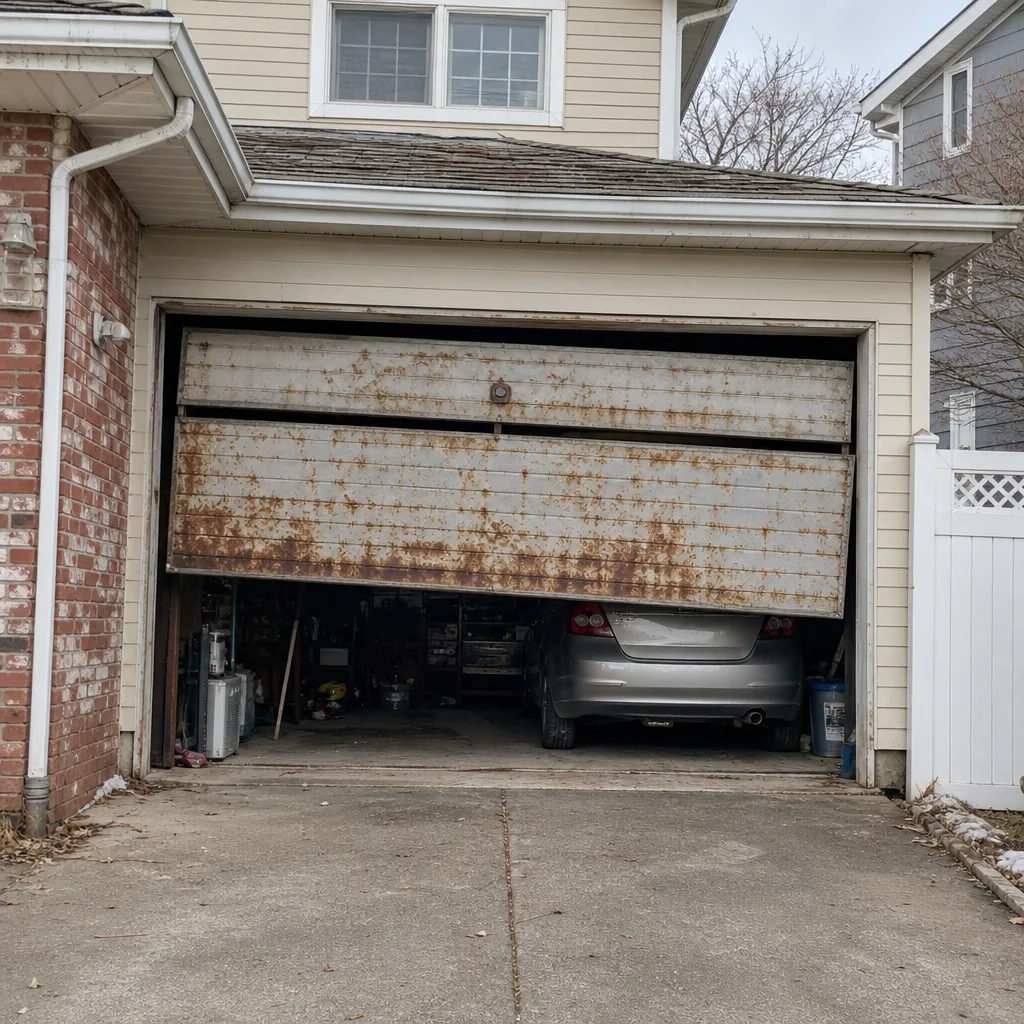 Before
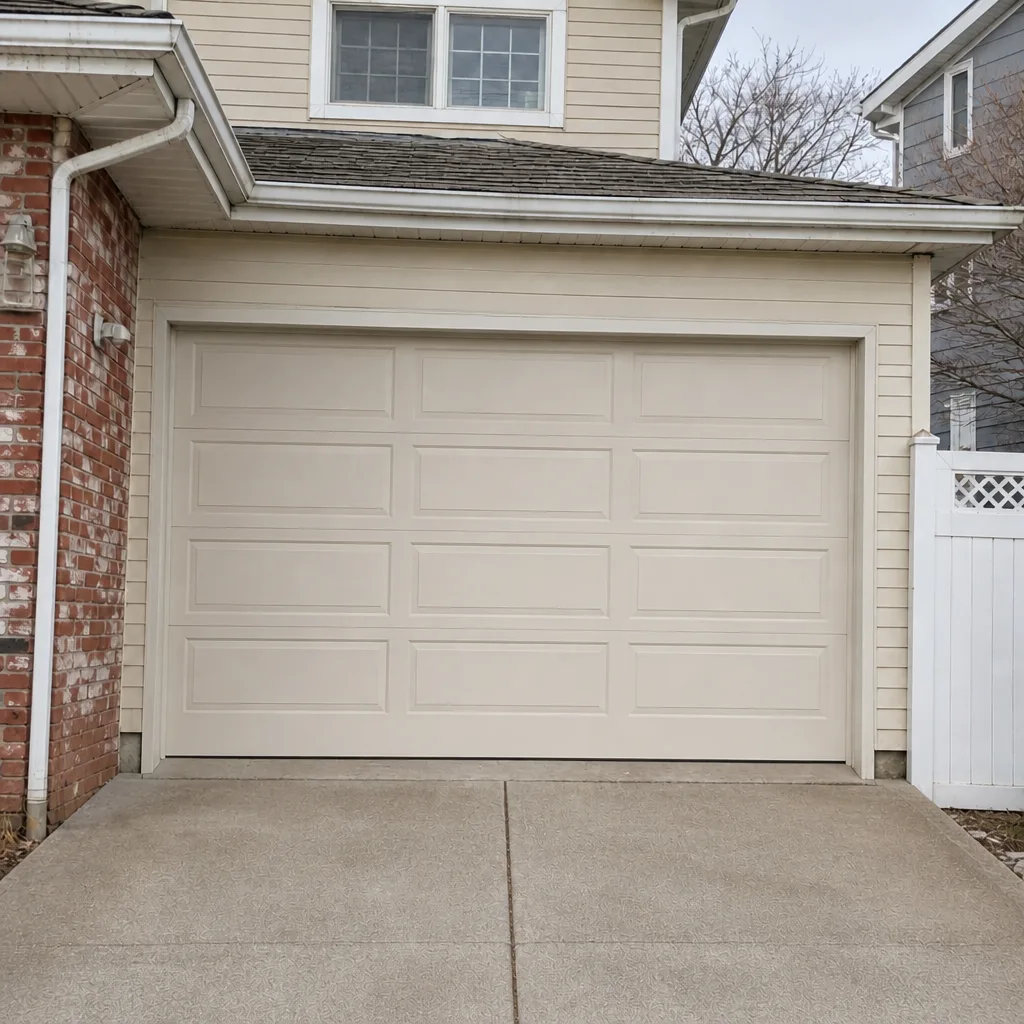 After
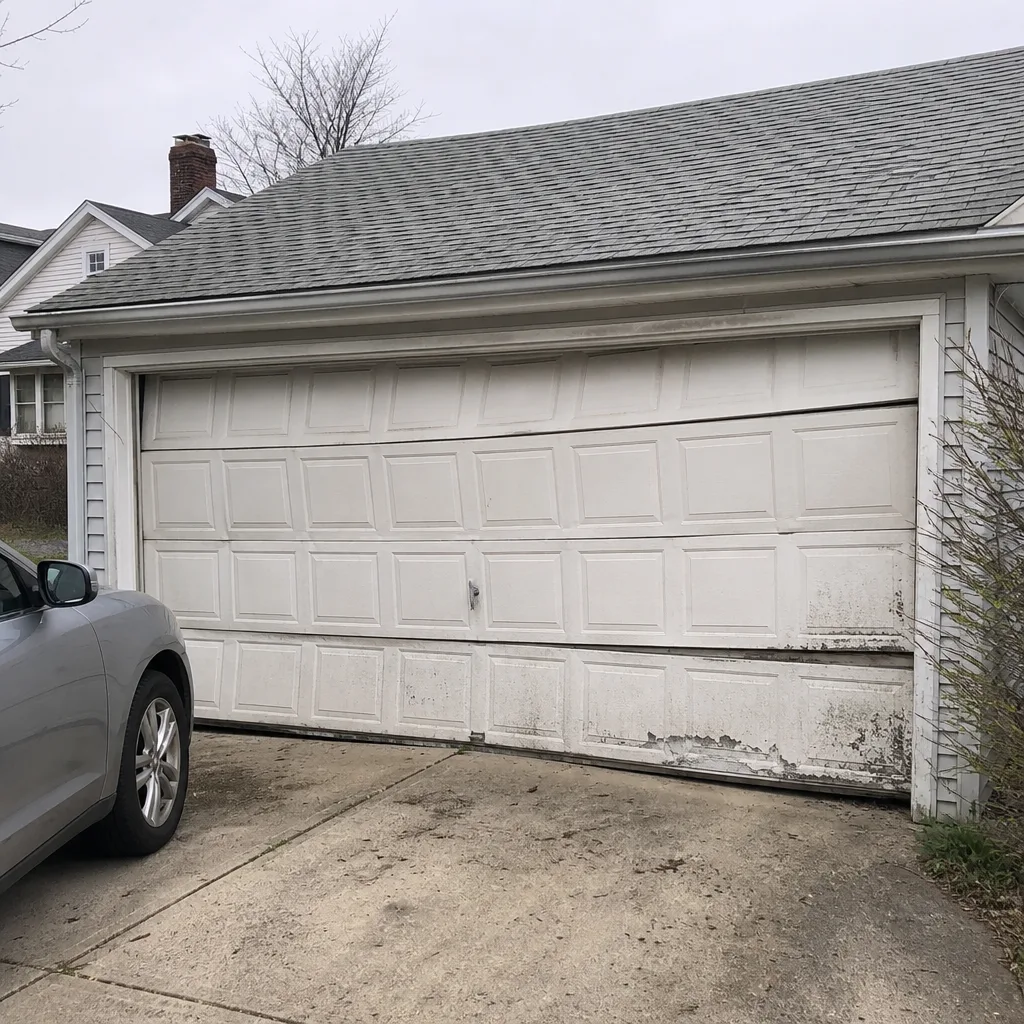 Before
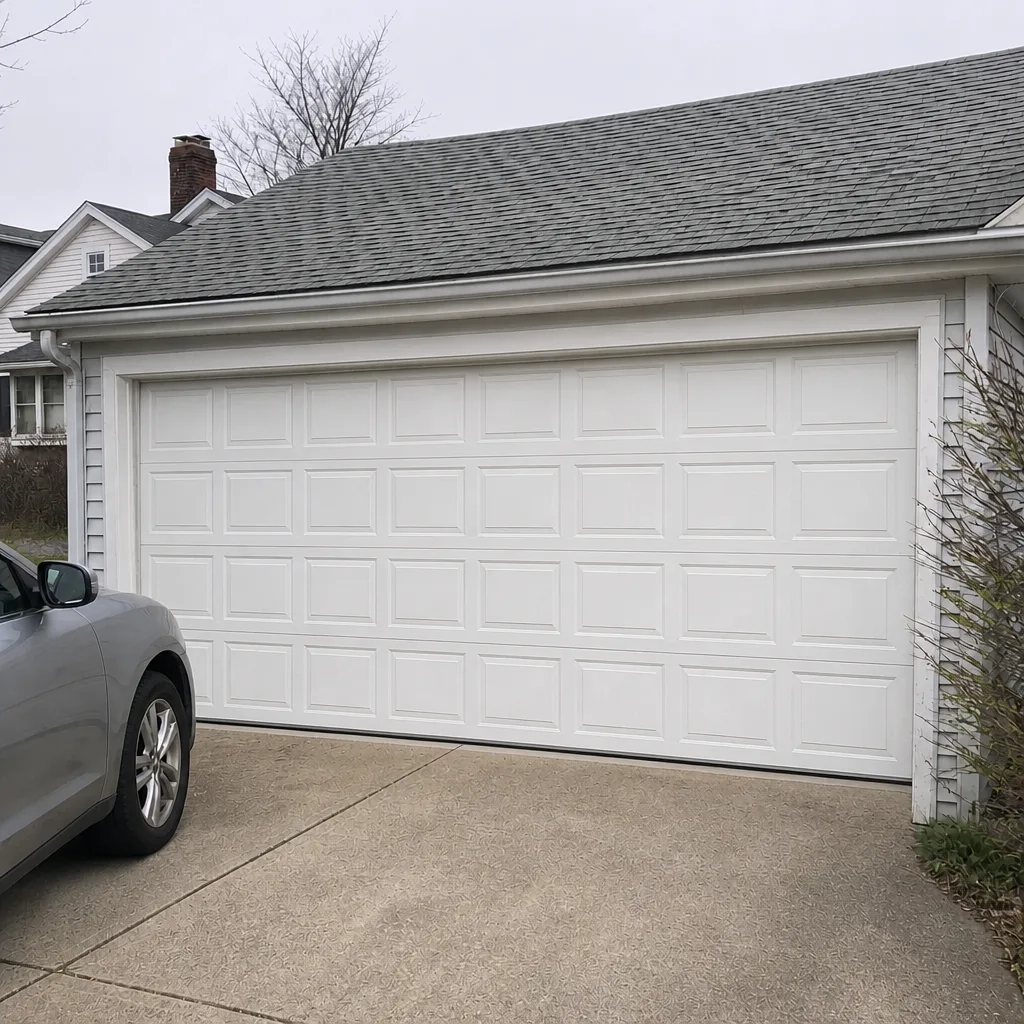 After
When to Call a Professional
Some garage door problems clearly call for a professional. A broken spring, a frayed or snapped cable, a door that won’t stay balanced, a door that falls or reverses unexpectedly, a track that’s bent or come away from its anchors, and any structural change to the opening are all jobs to hand to a trained technician. Electrical work on an opener is another. If the door won’t close and a storm is coming, or the door has become a security problem because it won’t latch, those are the calls worth making sooner rather than later. We offer emergency service for failures that can’t wait, alongside standard scheduling for planned work, and we work on what you already have rather than steering you to a particular brand. Ridgewood Garage Door Repair offers free estimates in Ridgewood: call (855) 692-0594. We answer 24/7, with fast dispatch from 7am to 7pm, Sunday through Friday.
Frequently Asked Questions
A single spring replacement typically runs $180 – $340, and a matched pair is usually about twice that because the two are replaced together. The written estimate sets the final price, and it’s quoted and agreed before any work starts. Call (855) 692-0594 for an exact quote; estimates are free.
Measure the clear opening width and height, the headroom above the opening, the backroom behind it, and the side clearance, then match a door to those numbers rather than to a standard size. Ridgewood’s older rowhouse garages often have less of one or more than a suburban door assumes. A free on-site measure confirms the size before you buy, and call (855) 692-0594 to set one up.
A repair generally doesn’t involve a filing, but a full door replacement on a New York City property can trigger Department of Buildings requirements depending on the scope. The reliable answer depends on your property and the work, so ask the NYC Department of Buildings before a replacement starts. We’ll help you scope the job so that question can be answered up front; call (855) 692-0594.
We service eight of the most widely installed brands: LiftMaster, Chamberlain, Genie, Clopay, Amarr, Wayne Dalton, Craftsman, and Raynor. That covers the smart-home openers and the legacy openers you’ll find in most Ridgewood garages. If your brand is one of these, call (855) 692-0594.
Yes. Torsion and extension springs store a large amount of energy and need calibrated tools and a real safety protocol, so a spring that lets go during a DIY attempt can cause serious injury. Leave it to a trained technician. Call (855) 692-0594 to book a spring repair.
The price is set by the written estimate, which is quoted and agreed before any work starts, so the figure you agree to is the figure you’re billed. Anything discovered during the job is discussed with you before it’s done, not added quietly at the end. Call (855) 692-0594 for a free estimate.
The Bottom Line
Garage doors in Ridgewood are shaped by the buildings around them. Rowhouse lots and narrow detached garages limit width, headroom, and clearance in ways a standard suburban guide never addresses, so the measurements come before the style. Sectional and roll-up doors fit most local configurations; swing-out carriage doors fit only where there’s room to swing. Materials matter more here because of temperature swing and grit, and openers should match the door and the ceiling rather than the other way around. Repairs outnumber replacements, spring work belongs to a trained technician, and a full replacement on a New York City property is worth checking with the Department of Buildings. Measure first, agree a written price second, and the rest falls into place.
If you’d rather hand the whole thing to someone who knows these doors, we’re a full-spectrum specialist covering repair, opener work, spring replacement, installation, and emergency service. Call Ridgewood Garage Door Repair at (855) 692-0594 for a free estimate. We answer 24/7, with fast dispatch from 7am to 7pm, Sunday through Friday. You can also start at our main Ridgewood Garage Door Repair page to see the full scope of what we do.
Written by the team at Ridgewood Garage Door Repair.