
Last updated November 24, 2026
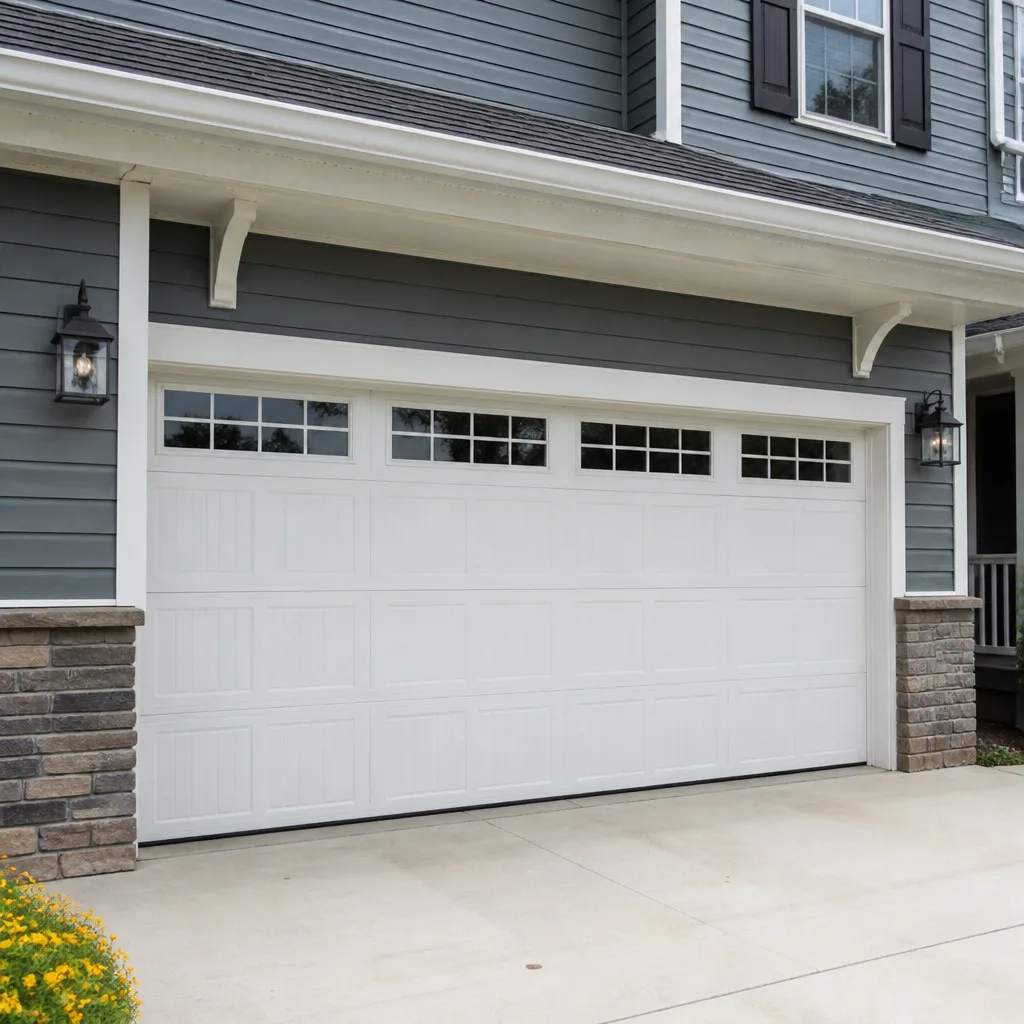
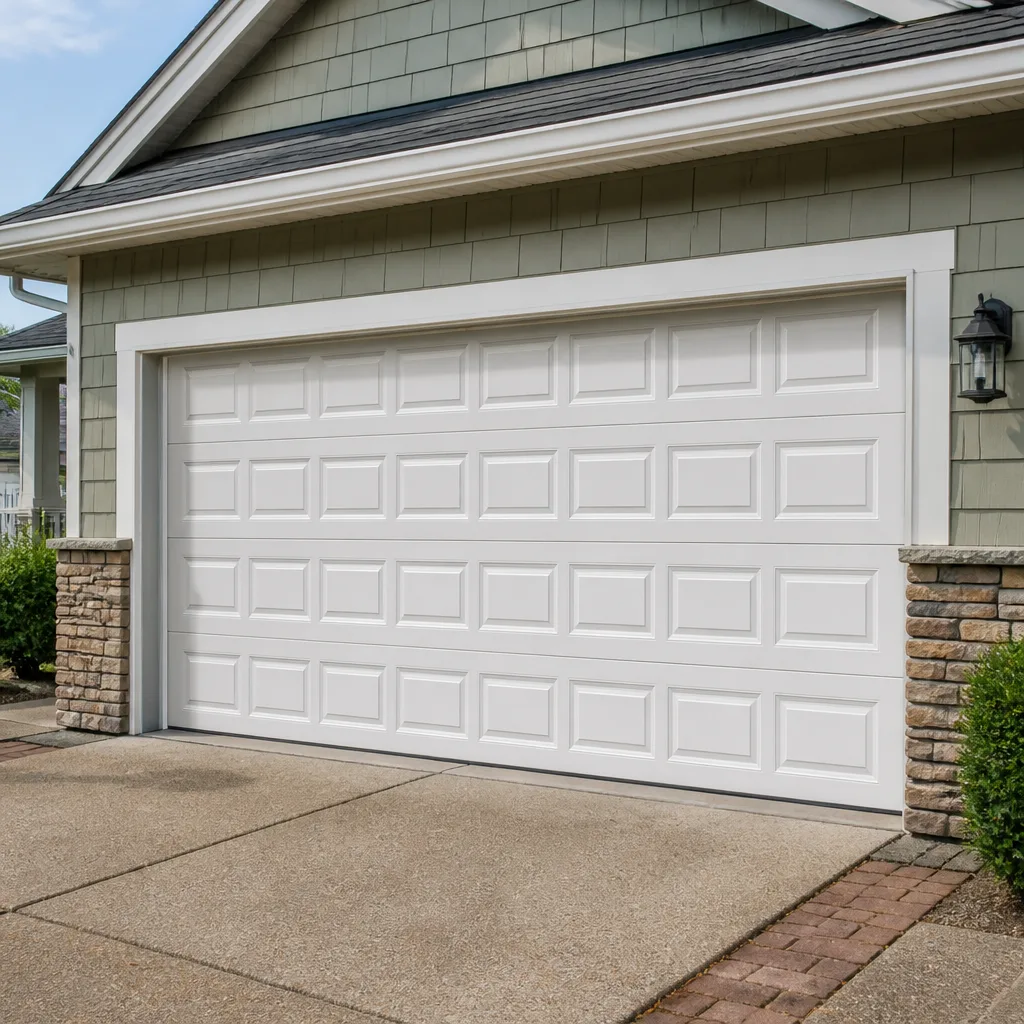 Raised-panel steel
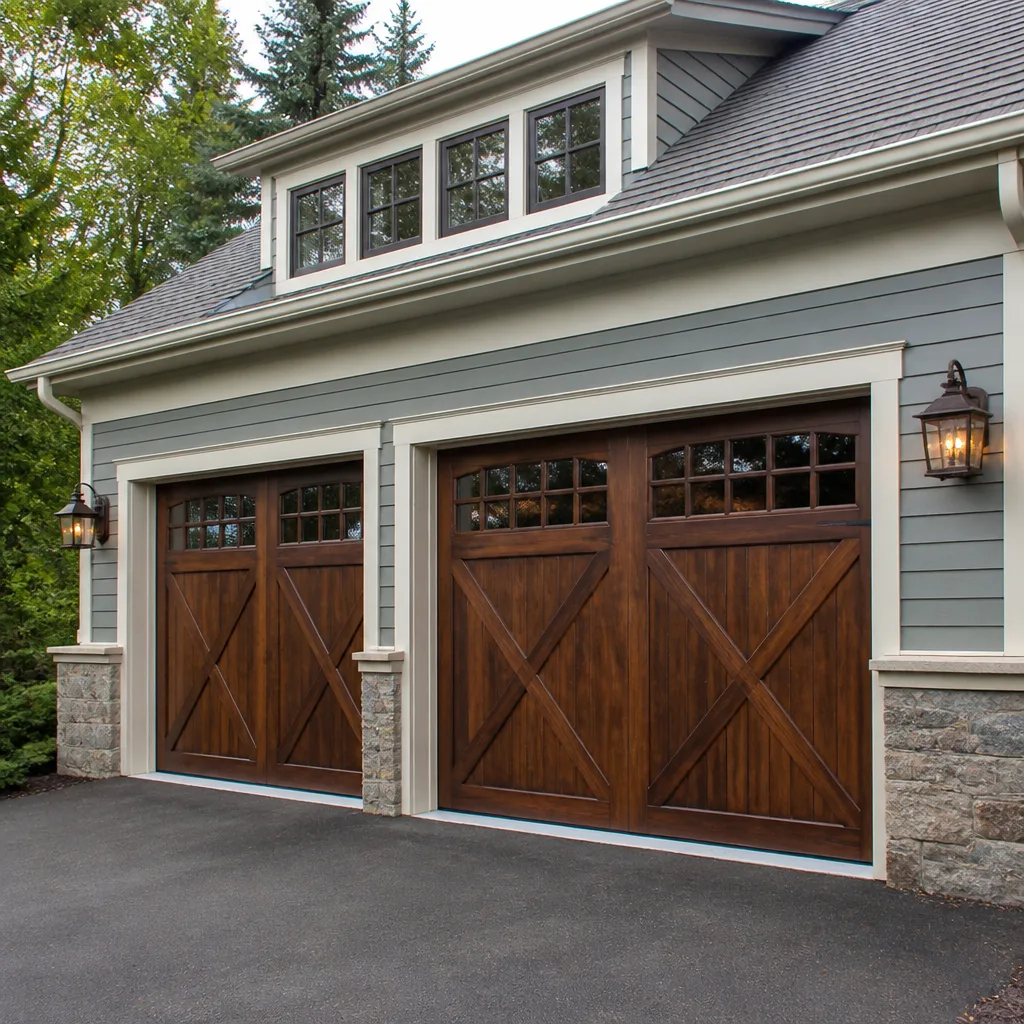 Carriage house
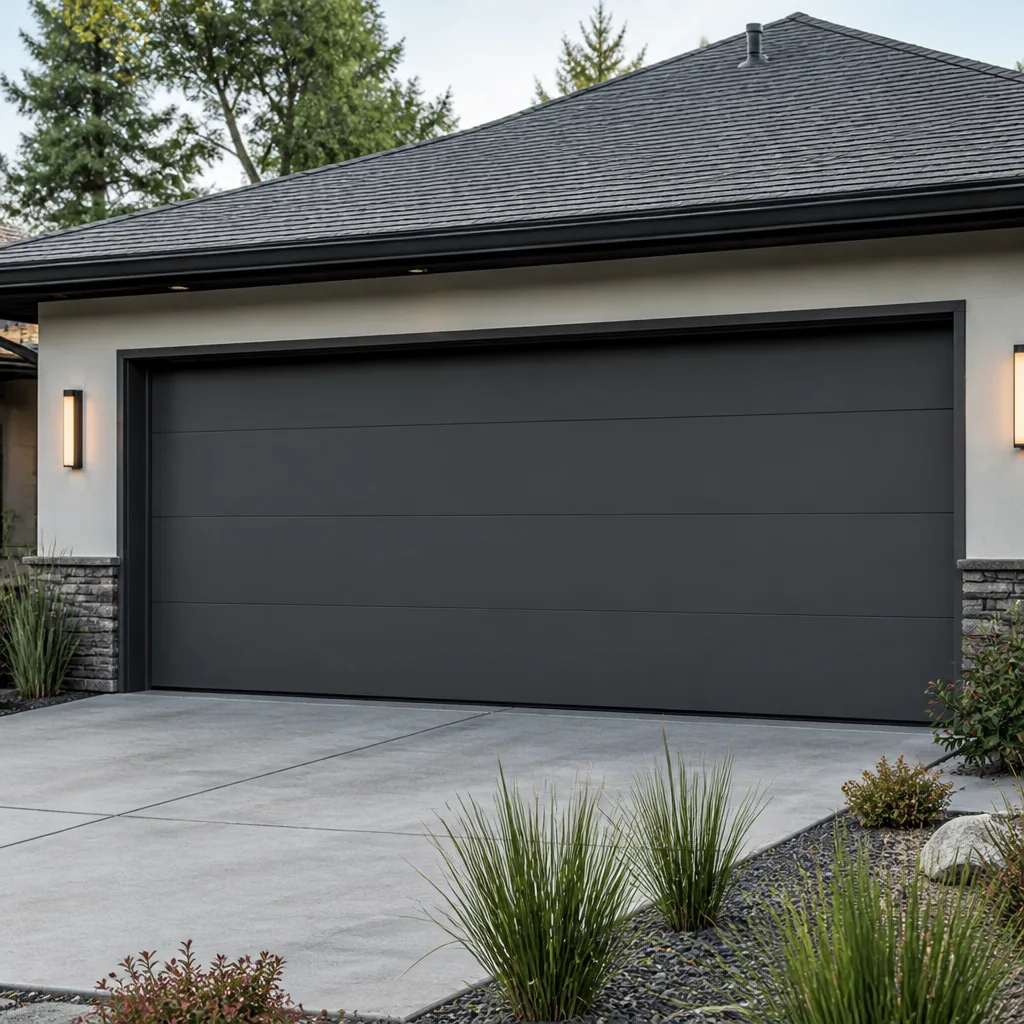 Modern flush
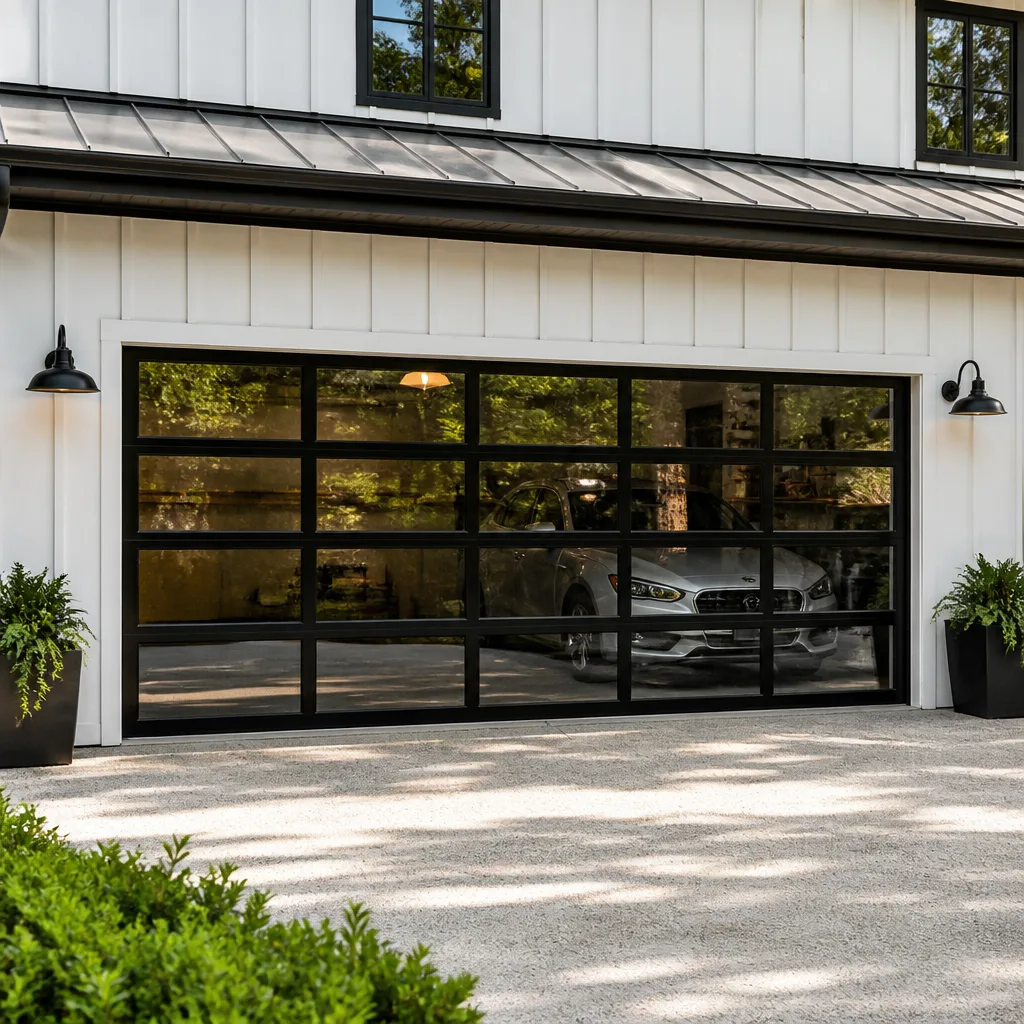 Full-view glass
 LiftMaster openers
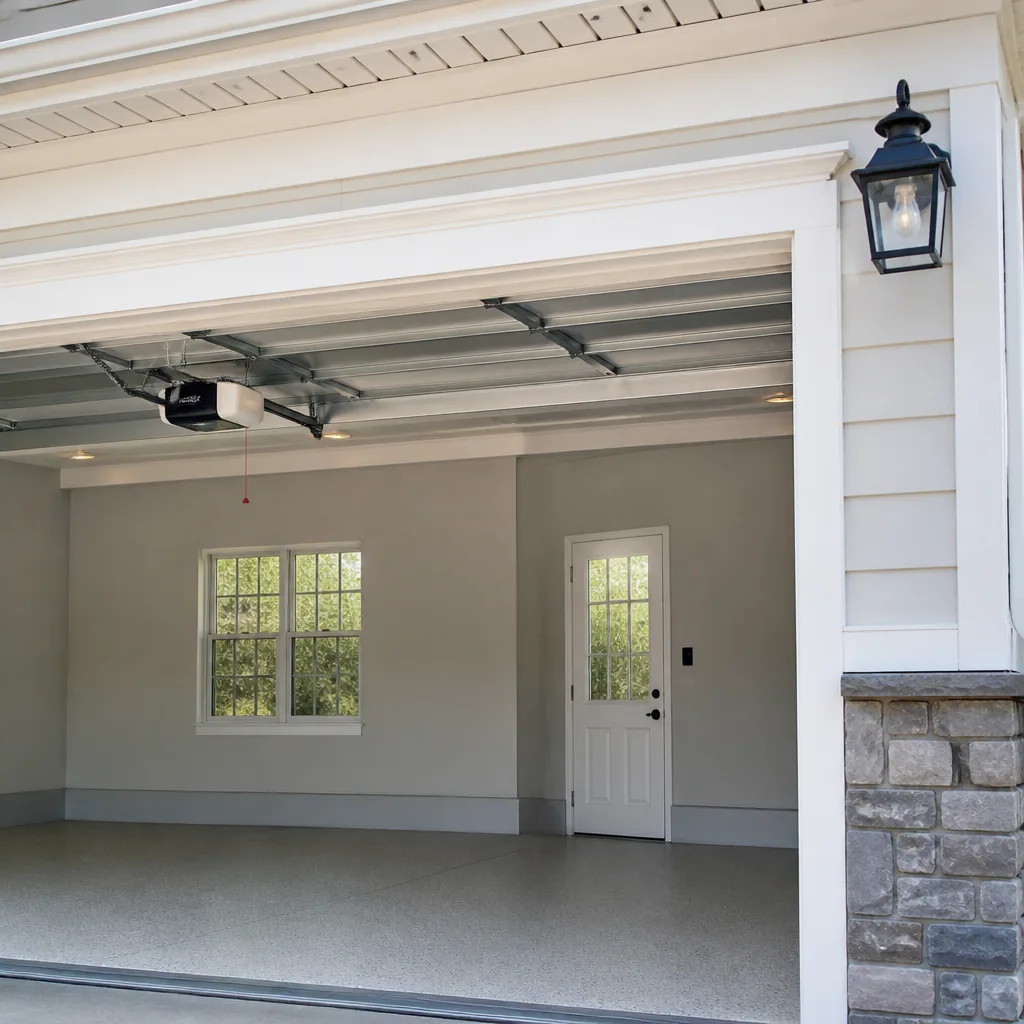 Chamberlain openers
Full 25-point door and opener safety check with every visit - springs, cables, rollers, tracks, and your LiftMaster or Chamberlain opener included
You get a price before we start. It does not change when the pro arrives.
Get your free estimateDIY vs Professional Garage Door: The Ridgewood Homeowner’s Decision Guide
Garage door springs store enough energy to break a wrist or worse, and they do it without warning. But here’s the part that trips up most homeowners: the risk isn’t proportional to how simple the task looks. Swapping a bottom seal is a Saturday morning job. Touching a torsion spring is a different category of decision entirely. The line between “I can handle that” and “put the tools down” has almost nothing to do with confidence and everything to do with stored energy, calibration, and what happens when a part lets go. This Ridgewood guide walks through which jobs are genuinely safe for a prepared homeowner, which aren’t, what DIY mistakes actually cost, and how to judge whether a YouTube tutorial is telling you the truth.
Quick Answer
In Ridgewood, replacing weatherstripping, aligning photo-eye sensors, and lubricating tracks and rollers are safe DIY tasks. Torsion springs, extension springs, cable drums, and header bracket work are not, because those parts hold stored tension that can cause serious injury the moment they’re released. If your door is heavy, crooked, off its tracks, or making a loud bang, call a professional: Ridgewood Garage Door Repair offers free estimates and technicians with up to 11 years of experience.
Styles & brands we work with
- Raised-panel steel
- Carriage house
- Modern flush
- Full-view glass
- LiftMaster openers
- Chamberlain openers
Table of Contents
- What’s Actually Safe to DIY and What Isn’t
- The Real Cost of DIY Errors on Common Jobs
- Ridgewood Access Constraints: Why “Simple” Installs Aren’t
- How to Vet a Garage Door Tutorial Before You Trust It
- Why Springs Get Their Own Section
- Openers: The One Repair Homeowners Get Right Most Often
- The Decision Framework: If X, DIY. If Y, Call.
- What Professional Service Typically Costs in Ridgewood
What’s Actually Safe to DIY and What Isn’t
Let’s draw the line clearly. Some garage door maintenance genuinely belongs in the homeowner’s hands, and skipping it is what shortens a door’s life. Other tasks belong to a technician with calibrated tools, and no amount of online research closes that gap. Here’s the split we use when a Ridgewood homeowner asks us where to start.
Safe for a prepared homeowner
- Weatherstripping and bottom seal replacement – The rubber seal along the bottom of the door wears out from contact with the driveway. It’s a low-tension part held by a track or screws.
- Photo-eye alignment – The two small sensors at the base of the tracks need to face each other. Straightening a bumped sensor is routine.
- Lubrication – A garage-door-specific lubricant on rollers, hinges, and the torsion bar (not the springs themselves) quiets a door and slows wear. Avoid WD-40 as a substitute; it attracts dust.
- Track cleaning and minor debris removal – Clearing leaves, grit, and spider webs from the tracks is harmless and helps the door roll smoothly.
- Remote and keypad programming – Pairing a new remote to a Craftsman or LiftMaster opener is a manual-and-patience job, not a safety risk.
- Tightening hinge and bracket bolts – Bolts that hold hinges to panels can loosen over time. Snugging them by hand is fine.
Not safe – leave it to a trained technician
- Torsion springs – Mounted on the shaft above the door, under extreme tension. Releasing one wrong can break bones.
- Extension springs – Run along the horizontal tracks, also under tension. They need safety cables and careful handling.
- Cable drums and cables – The cables are what lift the door. A cable that snaps under load can whip with force.
- Header bracket and spring anchor plate – These are what hold the whole spring system to the structure. Releasing mounting bolts loads them dangerously.
- Panel replacement on a door with a broken spring – The door needs to be de-tensioned first, and that’s the dangerous part.
The pattern is simple: anything holding stored energy is off-limits. Anything that just sits there and needs cleaning, aligning, or lubricating is fair game.
The Real Cost of DIY Errors on Common Jobs
The most expensive DIY mistake isn’t the part you buy twice. It’s the second service call that would have been a single visit if the first attempt had stopped in time. In our experience across Ridgewood, the money doesn’t go where homeowners expect.
There are three cost categories to weigh before you pick up a wrench:
- Parts. Cheap aftermarket springs and cables can cost more in the long run because they wear faster and fail sooner. A reputable technician sources parts matched to your door’s weight.
- The second call. If a DIY attempt gets partway and stalls, the technician now has to undo work before starting the real repair. That’s billable time. It’s the most common way a $30 seal becomes an $80 problem, or a “I’ll just loosen this bolt” becomes a full spring replacement.
- Injury. This is the one people underestimate most. Torsion spring work is one of the few home repairs where a single slip can send you to the emergency room. The injury risk isn’t about being uncoordinated; it’s about the sheer stored force in a wound spring. No online tutorial gives you the feel for how much energy is sitting there.
We won’t put a specific dollar figure on injury costs because that varies wildly by situation. But recognize this: the decision to touch a spring isn’t a decision about your bank account. It’s a decision about whether the potential for harm justifies the money saved. For every homeowner we’ve talked to who tried it, the answer afterward was no.
Ridgewood Access Constraints: Why “Simple” Installs Aren’t
Ridgewood garages are a mixed bag, and the layout of your property changes what a job actually involves. Plenty of houses here were built when a single car and a narrow driveway were the assumption. That shapes what a “simple” install turns into.
The most common access problem is the alley-facing or rear-set garage. When the garage sits at the back of a long lot, or opens onto a tight alley, delivering a new door becomes a logistics problem before it becomes an installation problem. A standard 8-foot-wide panel needs to be carried in and positioned without clipping fences, gutters, or the neighbor’s car. On a narrow driveway in a row-house block, there’s often no room to lay the panels flat while you attach hardware. The right tools and a second set of hands change that math – and that’s before you’re standing on a ladder trying to mount a header bracket that’s slightly out of plumb.
There’s a structural piece too. Older Ridgewood garages sometimes have headers that have settled, floors that slope, and door frames that are out of square. When the opening isn’t square, a new door won’t sit right unless the framing is shimmed correctly, and that’s a measurement and adjustment job. A homeowner working alone with a level and a tape measure can usually spot the out-of-square condition, but fixing it before the door goes up is the part that takes experience.
This matters for the DIY-versus-professional call in a specific way: even installs that look routine on paper can turn into a two-person job with a fair amount of physical risk. If your garage opens onto a tight alley or has a long carry from the street, professional installation is the better call even when the door itself is a standard size.
How to Vet a Garage Door Tutorial Before You Trust It
Garage door videos are everywhere, and they’re not all wrong. Some are genuinely useful for a homeowner doing safe maintenance. The problem is that the gaps in a bad tutorial are hard to see if you don’t already know the trade. Here’s a checklist for judging whether a video is worth following.
- Does it name the door’s weight or the spring’s rating? A tutorial that treats all springs the same is skipping the most important step. Springs are rated for specific door weights; the wrong rating is a safety problem.
- Does it show the door de-tensioned? Any video that gets near the spring system without showing how the door is safely de-tensioned and locked is missing the first step. That’s not an accident; it’s a red flag.
- Does it mention the manufacturer? Wayne Dalton, Raynor, and LiftMaster doors and openers have model-specific mounting details. A generic video may have the right idea and the wrong bolt pattern.
- Does it show the tools? Real spring work needs winding bars and calibrated tools. A video that doesn’t show what’s in the technician’s hands is telling you something.
- Does the presenter show their hands on the spring? If you can see them manhandling a wound spring without mentioning the danger, they’re either highly experienced or bad at communicating risk. Either way, don’t copy the motion.
- Are the comments disabled or full of “tried this and broke my door”? Comments sections are honest reviewers. Skim them before you start.
The single biggest gap in most DIY garage door videos is de-tensioning. A tutorial might show you how to remove a hinge, but it won’t always tell you that the door has to be fully down and the springs relaxed first. That step is the difference between a repair and an injury. When you watch a video for a job on the “safe” list above, you’re on solid ground. When the video touches a spring or a cable, watch it, then leave it to a professional.
Why Springs Get Their Own Section
Springs are the reason this guide exists, so let’s be specific about what makes them different from every other part on the door. A garage door weighs 100 to 400 pounds depending on size and material. The springs are what let a 200-pound door open with one hand. They do that by storing energy when the door closes and releasing it when it opens. That energy is always there, coiled and waiting.
Two spring types dominate residential doors. Torsion springs sit horizontally above the door on a shaft and are wound to a specific number of turns. Extension springs run along the horizontal tracks and stretch when the door closes. Both store enough force to cause injury if a bolt or cable is released under load. If you’re curious where your springs sit, look above the door; that’s the torsion configuration. Look along the tracks; that’s extension.
We offer spring repair as a dedicated service because it requires tools and knowledge that are beyond general handyman work. A technician uses winding bars – heat-treated steel rods that seat into the spring’s winding cone – and a calibrated understanding of how many turns the spring needs. Without the right bar, the winder can slip out and the spring can spin free. That’s the moment that breaks a wrist. We say this not to scare you into calling us, but because it’s the honest answer. If you take nothing else from this guide, take this: don’t try spring work.
What you can do is recognize the signs that a spring is failing. Loud bang from the garage. A door that feels heavy when you lift it. A gap between the door and the floor. Those are all “call a pro” signals. Our technicians have up to 11 years of experience, and we work on what’s already in your garage, from a LiftMaster opener to a Raynor door to whatever spring system sits above it.
Openers: The One Repair Homeowners Get Right Most Often
Opener work is the gray zone, and it’s worth treating separately. Unlike springs, an opener repair usually doesn’t involve stored energy that can hurt you. But the diagnosis is where homeowners come unstuck. Most “opener failure” calls we receive in Ridgewood aren’t opener failures at all – the door won’t close because the sensors are misaligned, the track is binding, or a garage-door-specific safety feature has tripped. Those are fixable with a flashlight and a few minutes of troubleshooting.
Where the DIY ceiling sits: replacing a logic board, swapping a gear assembly, or programing a newer smart-home-integrated system. LiftMaster MyQ and Chamberlain units pair with phone apps, and when they lose that connection it can be a network issue, a firmware update, or a hardware fault. That’s a diagnostic problem, and the diagnosis is the service.
The brands matter here. A Craftsman opener from a house built in the 1990s and a new Chamberlain with MyQ don’t fail the same way. If you do decide to call, know that we service openers from LiftMaster, Chamberlain, Genie, Clopay, Amarr, Wayne Dalton, Craftsman, and Raynor. The opener brand shouldn’t be a reason to feel like you can’t get help. It should be the thing we already know how to handle. Our garage door opener repair services cover the whole spectrum, from legacy systems to connected households.
The Decision Framework: If X, DIY. If Y, Call.
Here’s the framework we’d give a friend. It’s not about whether you’re handy. It’s about the specific job in front of you.
If X, DIY is reasonable
- You’re replacing weatherstripping, a bottom seal, or a sensor bracket.
- You’re lubricating tracks and rollers.
- You’re programing a remote or a keypad.
- You’re tightening a loose hinge bolt.
- You’re clearing debris from the tracks.
- You’re confident the job involves no stored energy.
If Y, the math favors professional service
- The door is heavy to lift manually.
- You heard a loud bang from the garage.
- The door is sagging, crooked, or off its tracks.
- A spring or cable is visibly damaged.
- You’re replacing a panel on a door with unknown spring condition.
- The garage is at the back of a long lot or opens onto a tight alley, and you’re installing anything.
- You’re not sure which category the task falls into.
The “not sure” rule matters most. If you can’t confidently place a task on the left side of that line, treat it like the right side. The cost of a professional visit is always less than the cost of a mistake on the wrong task. That’s not condescension; it’s what the physics of a garage door demands.
What Professional Service Typically Costs in Ridgewood
Pricing is a big part of the DIY question, because the savings from DIY are the whole reason for the decision. So here’s the honest picture of what a professional visit involves, and why the price is set by the written estimate.
Every job we quote starts with a free estimate. A technician looks at the door, the springs, the opener, the tracks, and the structure, and writes down what needs to happen and what it will cost. That written price is agreed before any work starts. You’ll never get a bigger invoice than the quote, provided the scope hasn’t changed – and if the technician finds something unexpected, you’ll have a chance to discuss it before the price moves. A written estimate is the mechanism that protects you here, whether you’re looking at garage door repair for a tired spring or a full replacement.
What actually drives a quote: the parts required (springs, cable, opener board), the labor time, and the access conditions of your property. A door that opens onto a wide driveway with clear access is a simpler job than a rear-set garage with a long carry. Springs are priced individually. A matched pair is usually replaced together, so a pair costs roughly twice a single spring. When you call, ask for a written estimate with the parts and labor broken out. That’s the number you compare against your DIY time and risk.
For anything involving a new door or a full opener replacement, the work is measured, ordered, and scheduled around the estimate. We’re not going to pretend a garage door installation happens the same day you call; it’s a planned job, and the planning is what keeps it from becoming a DIY nightmare. Standard service and repair work is the same-day side of the business.
Common Mistakes to Avoid
- Treating all springs the same. Extension and torsion springs fail differently and are handled differently. A tutorial for one isn’t a tutorial for the other, and rating a spring to the wrong door weight is a safety hazard, not a repair.
- Swapping a weather seal without checking the track. A new seal on a bent track will wear in weeks. On a Ridgewood garage with a sloped driveway, a chewed-up seal is often a sign the bottom bracket is dragging against something.
- Using the wrong lubricant. White lithium grease and silicone-based sprays work for garage doors; cooking oil, olive oil, and general-purpose grease do not. The wrong product attracts grit into the rollers and shortens their life.
- Tightening a hinge bolt into a cracked panel. The bolt was never the problem; the panel was. Snugging it into a cracked spot can split the panel and turn a $5 bolt into a panel replacement.
- Trusting a single video. Watching one tutorial and calling the job “checked” skips the de-tensioning step that dozens of videos leave out. Cross-reference at least two sources before you commit to a task on the “not safe” list.
- Ignoring a loud bang. A bang from the garage is usually a broken spring, not a door settling. Treating it as cosmetic lets the door run on one good spring and wears the opener motor, leading to a second and larger repair.
- Attempting a back-alley install solo on a narrow lot. In Ridgewood, delivering and positioning a new door panel through a tight alley is a two-person job with real injury risk. If the delivery route is constrained, that alone justifies professional service.
See the difference
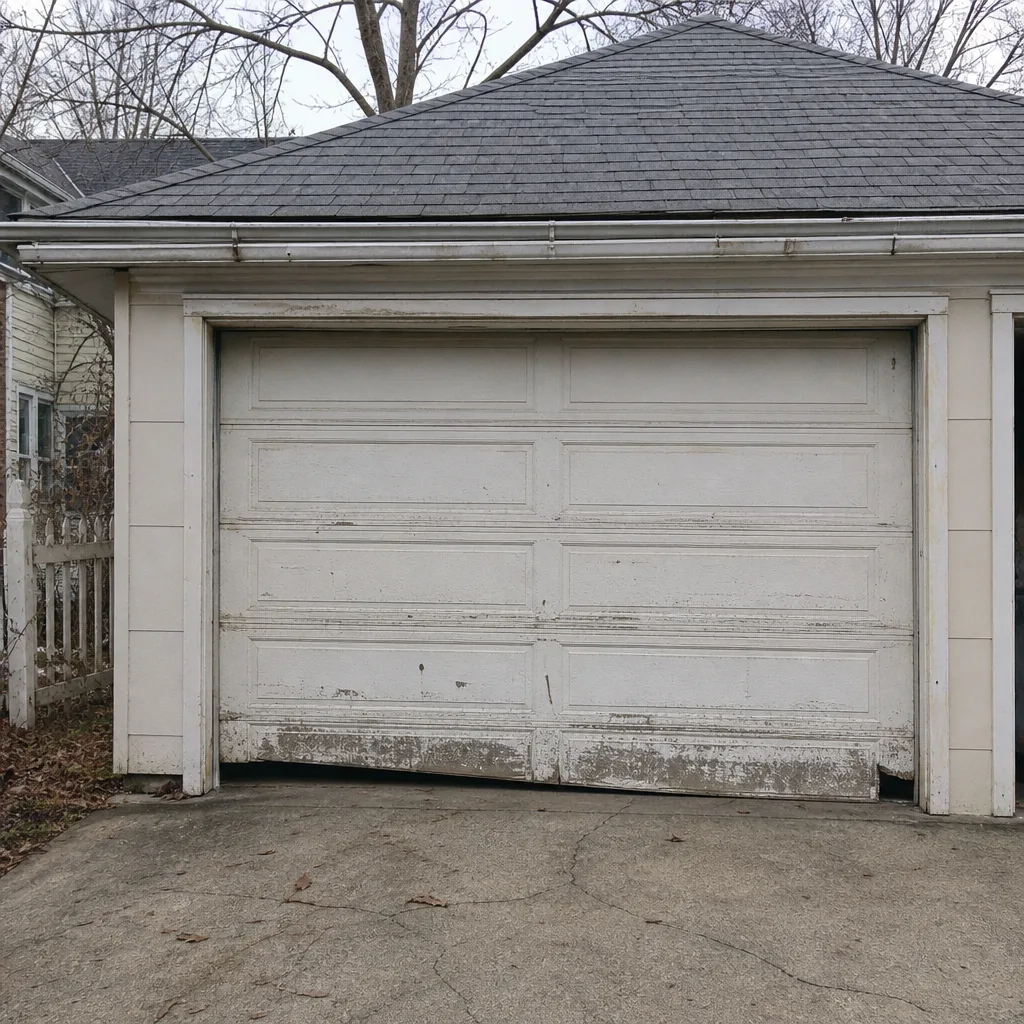 Before
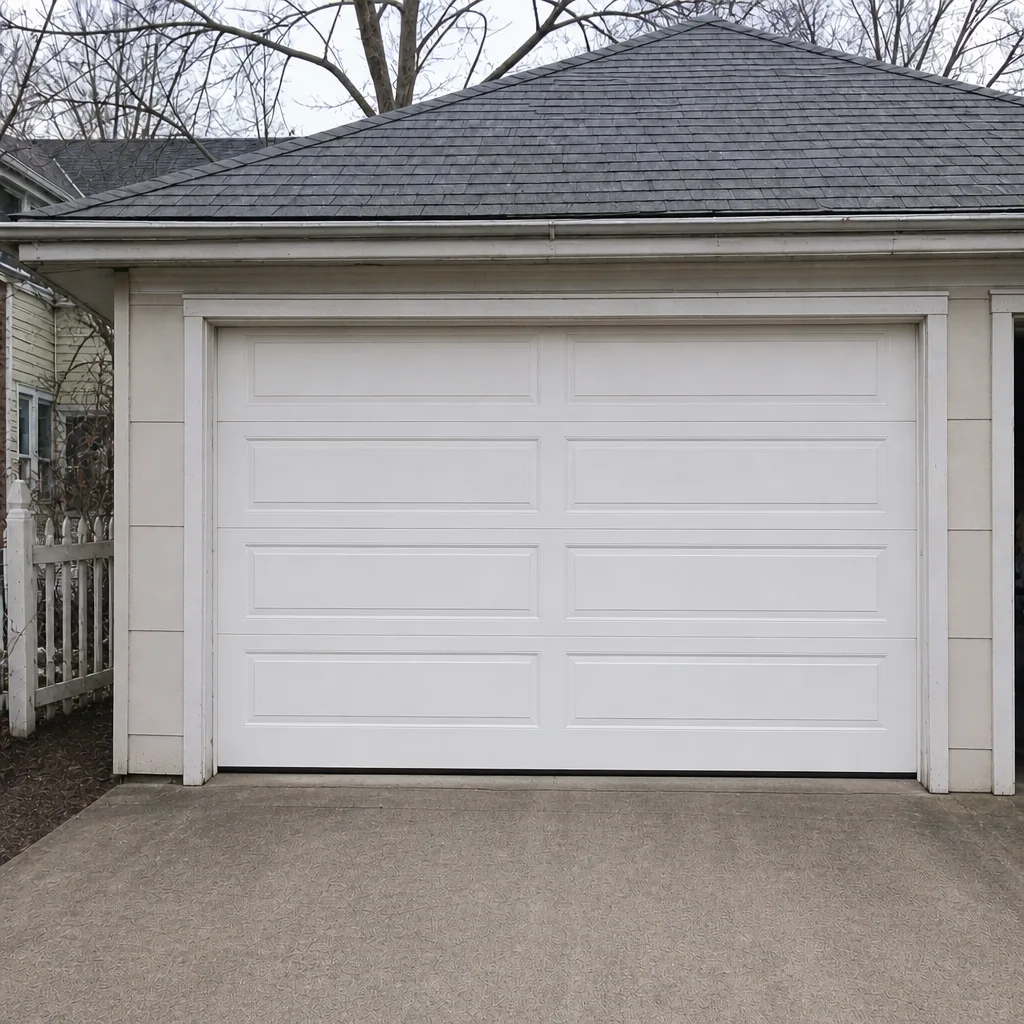 After
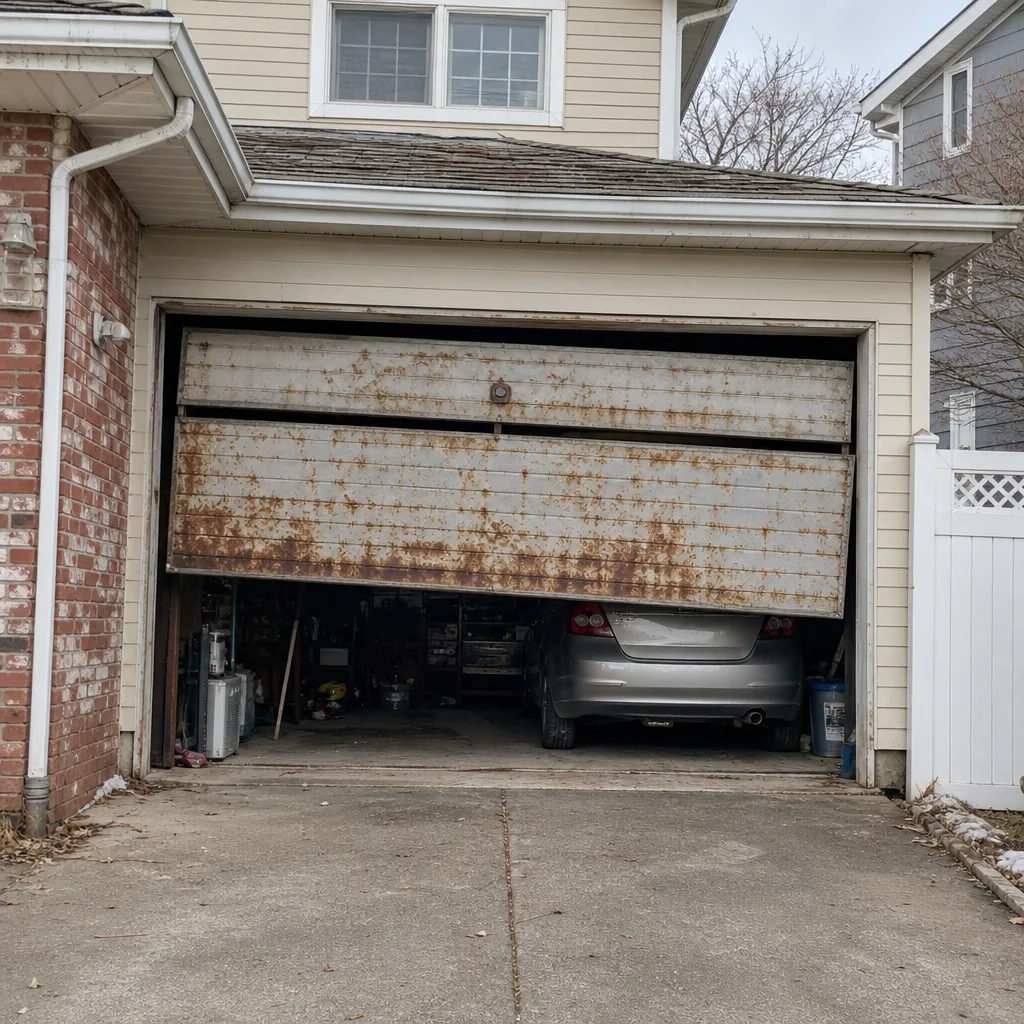 Before
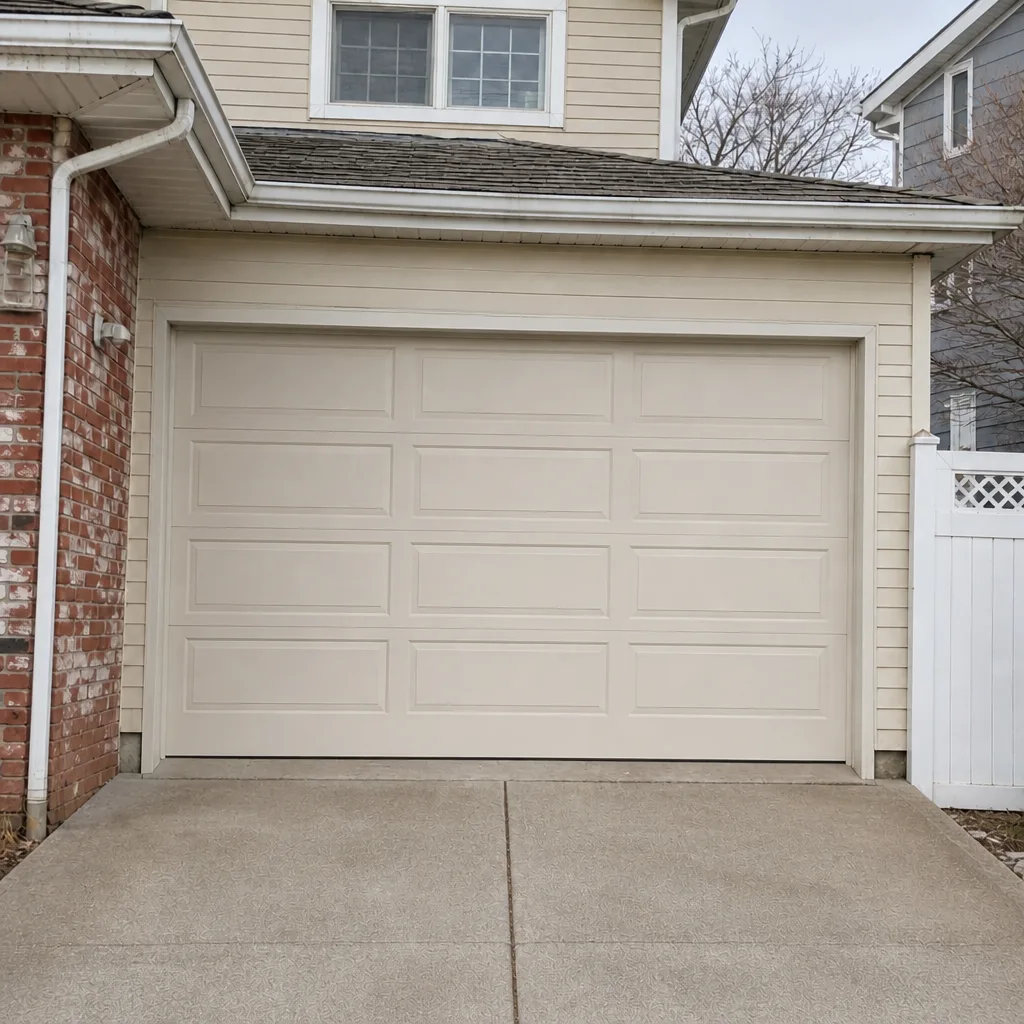 After
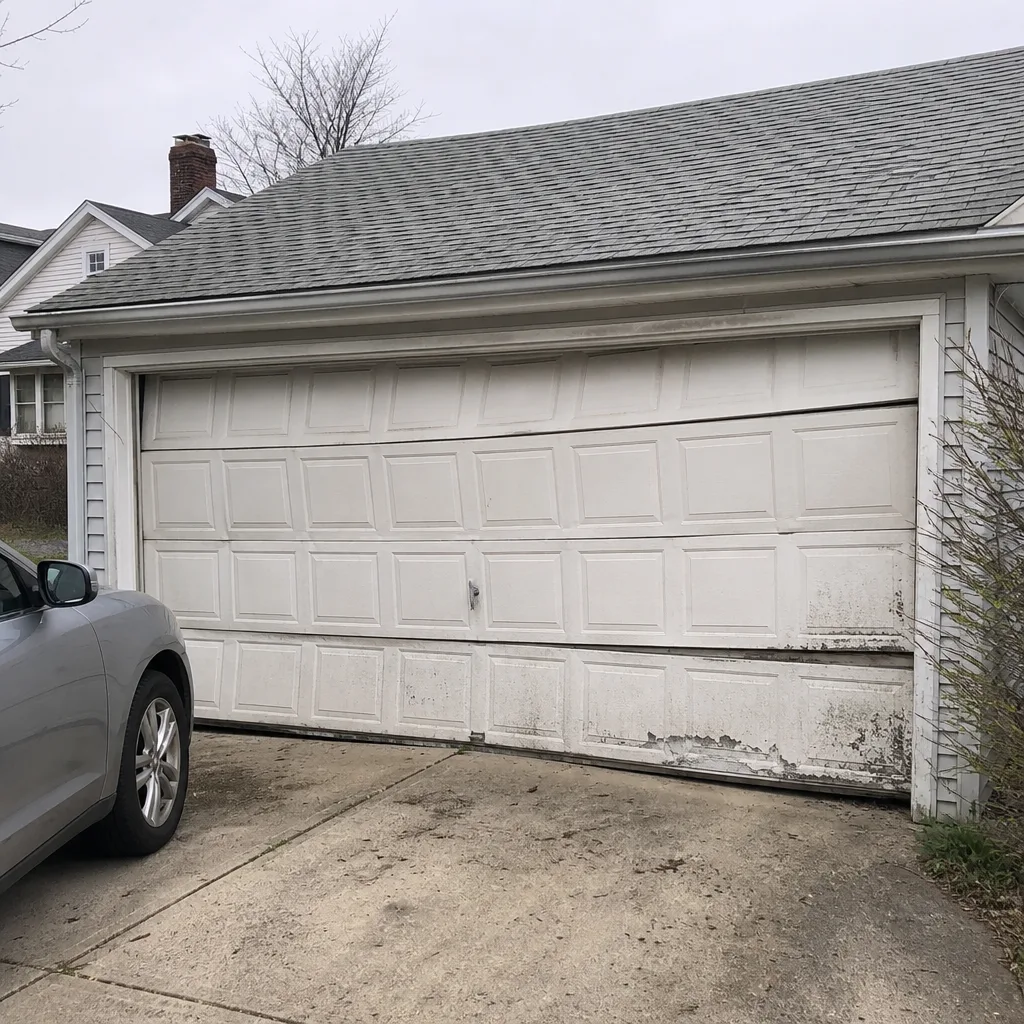 Before
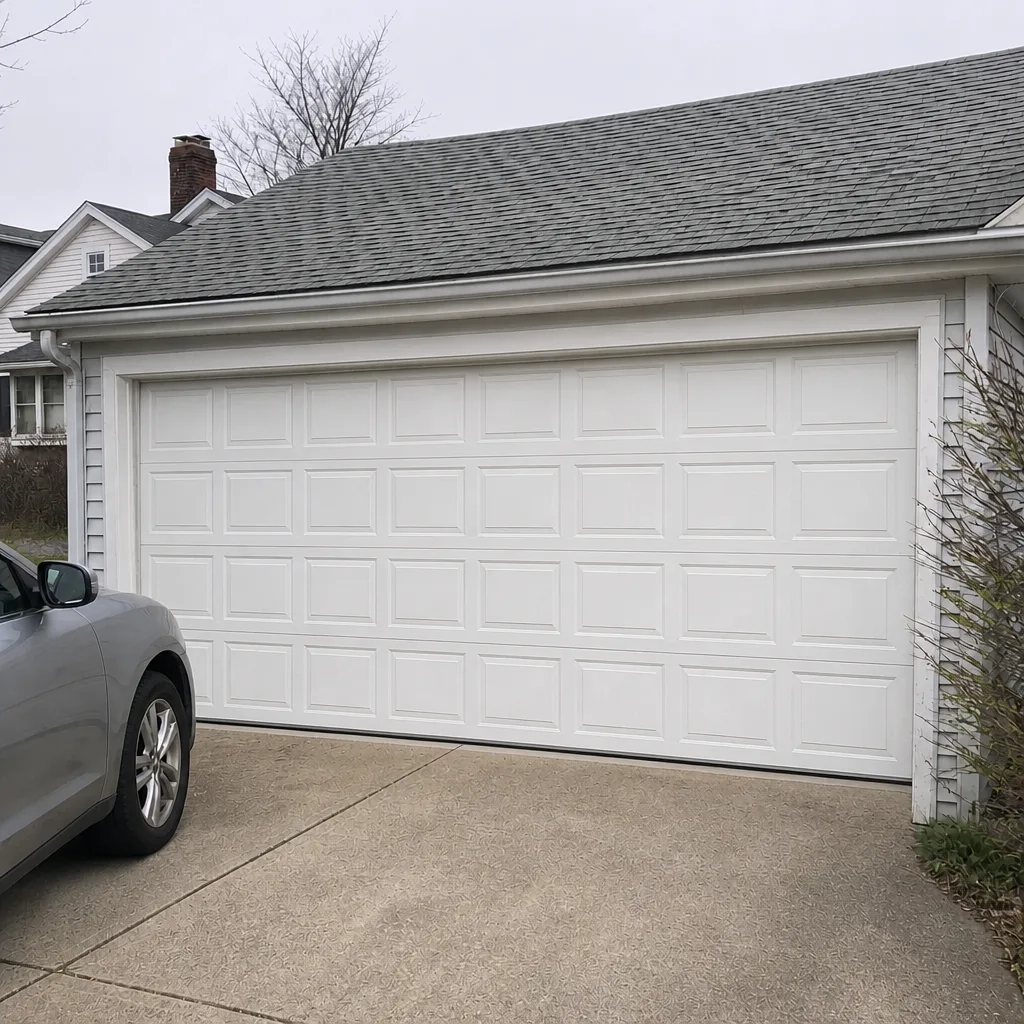 After
When to Call a Professional
Call a professional the moment a task involves springs, cables, or the header bracket. If your door is heavy to lift, crooked, off its tracks, or making a loud noise, those are the same signals. If you’re planning a new door on a rear-set Ridgewood garage or a narrow alley lot, professional installation saves you the physical risk and the measurement errors that show up weeks later. And if you’ve started a job and you’re uncertain whether the next step is safe, stop, and call. Ridgewood Garage Door Repair offers free estimates in Ridgewood – call (855) 692-0594. We answer 24/7. Fast dispatch from 7am to 7pm, Sunday through Friday.
Frequently Asked Questions
No, you shouldn’t. Garage door springs hold stored tension that can cause serious injury the moment a winding bar slips or a cable releases under load, and that risk isn’t reduced by watching enough tutorials. Spring repair is a job for a trained technician with calibrated tools; call (855) 692-0594 for a free estimate.
Weatherstripping, bottom seal replacement, photo-eye alignment, lubrication, remote programming, and tightening a loose hinge bolt are all safe DIY tasks. They involve no stored energy and no risk of sudden release. Anything on a spring, a cable, or a header bracket is not on that list.
The price is set per job by a written estimate given before any work starts, and the estimate visit is free. Parts, labor, and access conditions all affect the total, and springs are priced individually so a matched pair costs roughly twice a single spring. Call (855) 692-0594 for an exact quote – estimates are free.
A loud bang from the garage usually means a spring has broken, and the repair is not a DIY job. The door can run on one good spring for a while, but that wears the opener and the remaining spring faster, and the door becomes unsafe to lift manually. Treat it as a professional repair, not an inconvenience to ignore.
Same-day service is available for repair and spring work, and we dispatch Sunday through Friday from 7am to 7pm. New door installation is measured, ordered, and scheduled around a written estimate, so that work isn’t same-day. Call (855) 692-0594 and we’ll book the right kind of visit for your door.
We service openers and doors from LiftMaster, Chamberlain, Genie, Clopay, Amarr, Wayne Dalton, Craftsman, and Raynor. If your system falls within that group, we’re set up to diagnose and repair it. If it doesn’t, call and we’ll tell you honestly where you stand rather than sell you a service we can’t stand behind.
The Bottom Line
The DIY-versus-professional question comes down to three filters: does the task hold stored energy, is the access safe, and is the diagnosis obvious. Weatherstripping, lubrication, and sensor alignment pass all three and belong in your hands. Springs, cables, and header bracket work fail the first filter and should never be a homeowner job. In Ridgewood, tight alleys and older rear-set garages push even routine installs toward professional service. If you’re unsure which side of the line you’re on, that uncertainty is the answer. Call (855) 692-0594 for a free estimate and a written price before any work starts. We answer 24/7. Fast dispatch from 7am to 7pm, Sunday through Friday.
Written by the team at Ridgewood Garage Door Repair.