
Last updated November 24, 2026
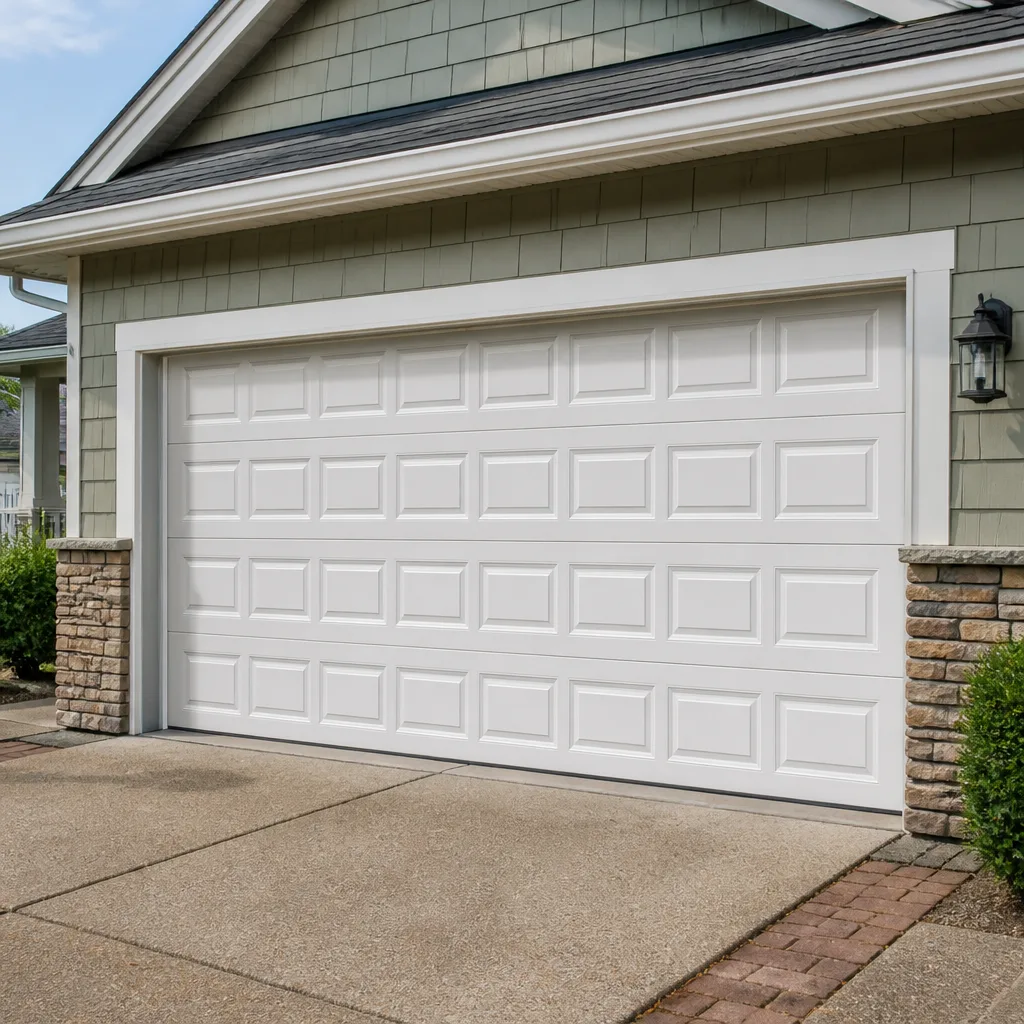 Raised-panel steel
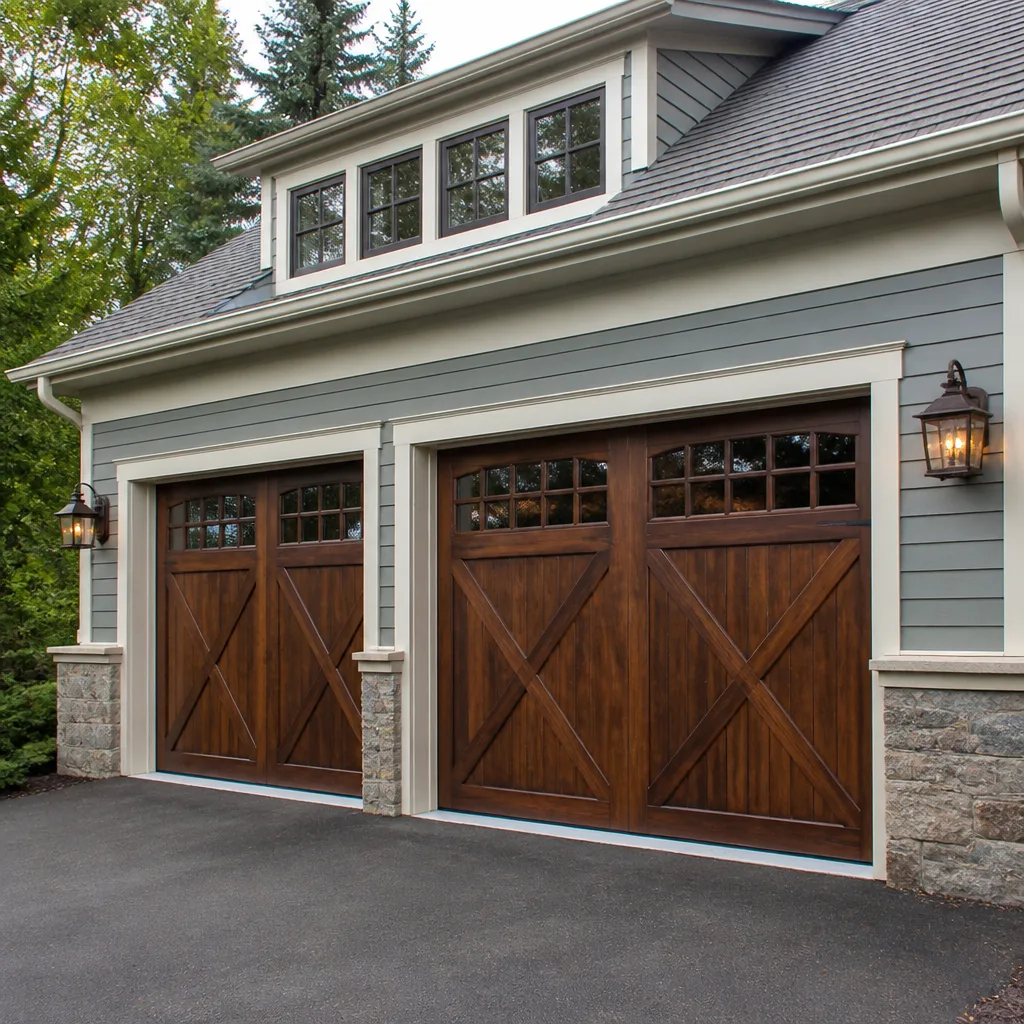 Carriage house
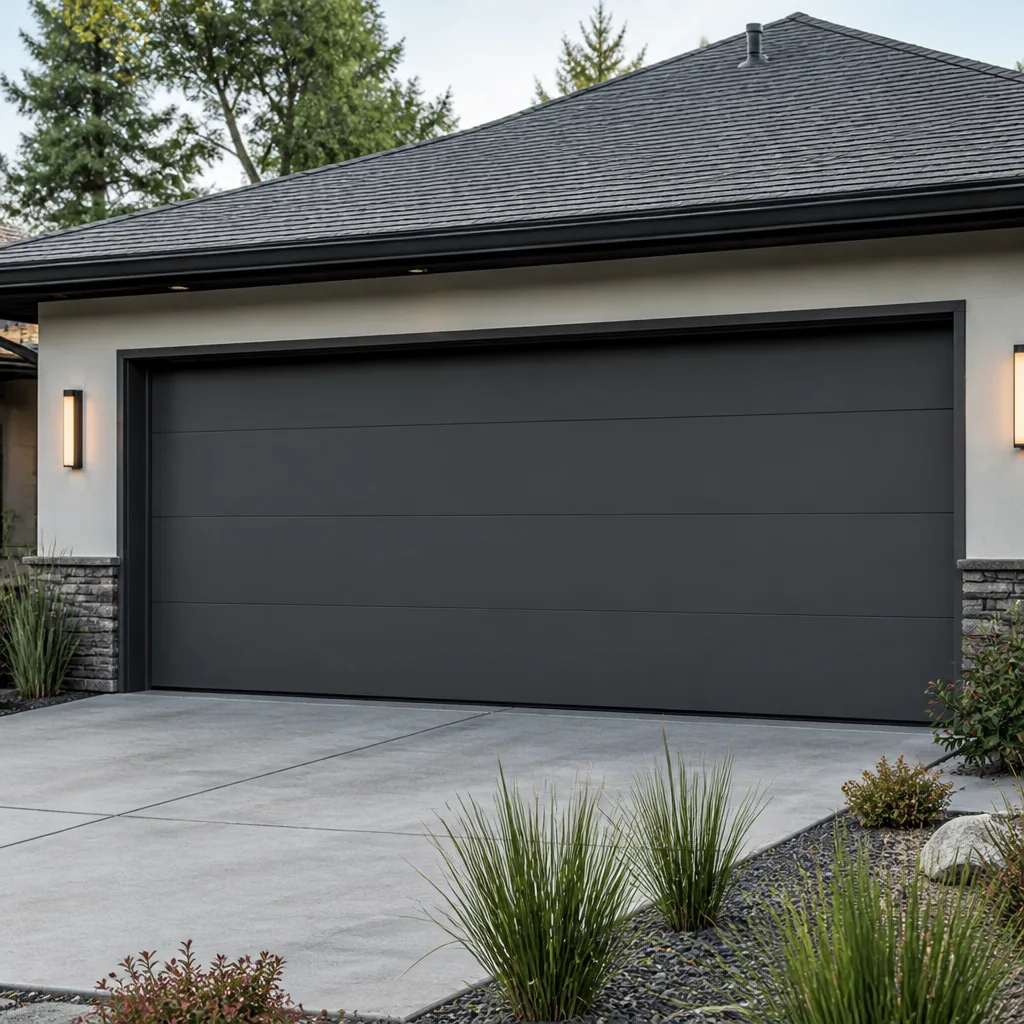 Modern flush
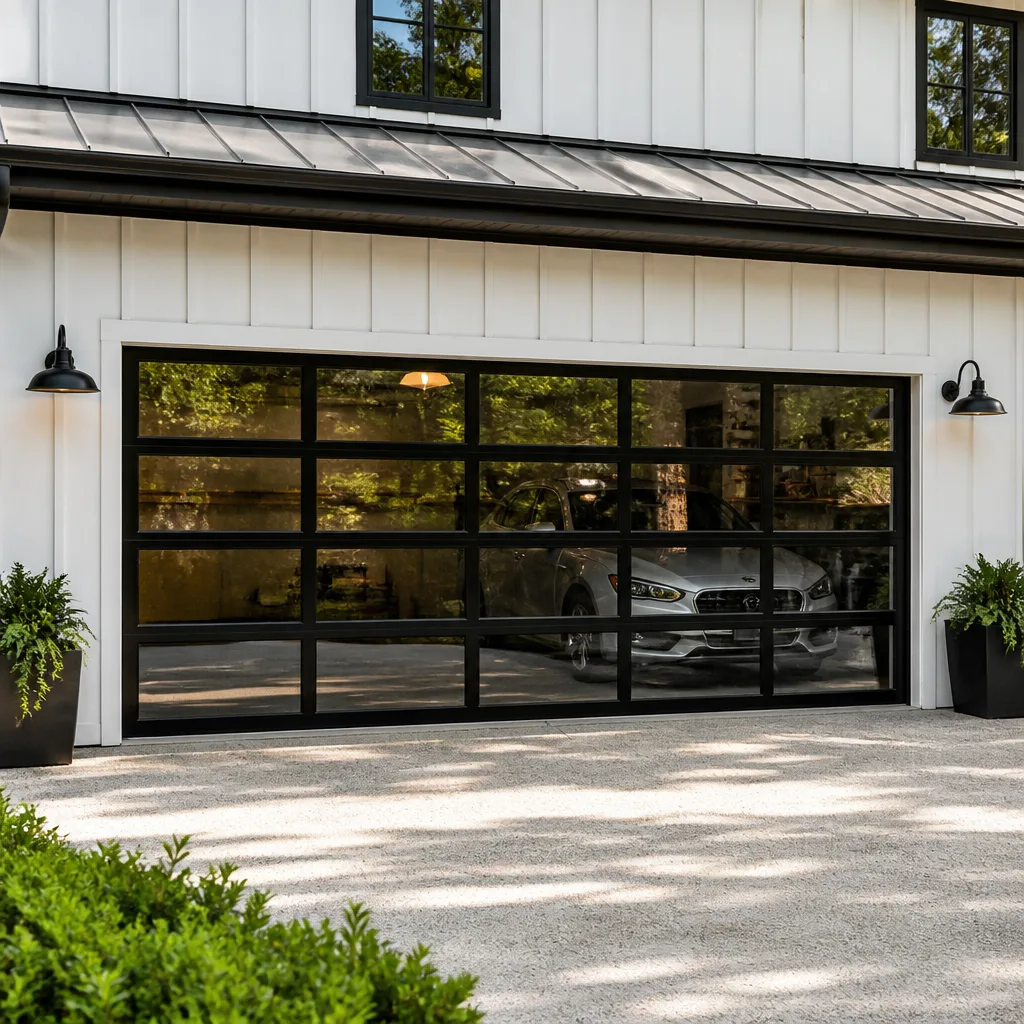 Full-view glass
 LiftMaster openers
 Chamberlain openers
Full 25-point door and opener safety check with every visit - springs, cables, rollers, tracks, and your LiftMaster or Chamberlain opener included
You get a price before we start. It does not change when the pro arrives.
Get your free estimateGarage Door Repair Maintenance Checklist for Ridgewood Homeowners
Most garage door maintenance checklists floating around the internet are brand pamphlets in disguise. They tell you to “lubricate moving parts periodically” and “inspect hardware regularly,” then send you off with no idea which parts are safe to touch and which ones break fingers. The number one reason Ridgewood garage doors fail ahead of schedule isn’t wear. It’s skipped lubrication on hinges that sit in an unheated alley garage and seize solid over a single winter. Once a hinge freezes, the opener starts fighting metal instead of gliding it, and something has to give. This guide is built around the failure patterns that actually turn up in Ridgewood service calls, sorted by what you can do safely and what needs a technician. You’ll learn the exact products and intervals that work in this climate, a 30-second balance test that catches tired springs early, and how to keep a log that cuts diagnostic time when you do call.
Quick Answer
The core garage door maintenance checklist for Ridgewood homeowners is: lubricate hinges, rollers, and springs twice a year with a lithium-complex or silicone spray (never WD-40), run a visual check of cables and brackets every month, do a 30-second balance test each season, and keep a written log of what was done and when. Lubrication and visual checks are safe for most homeowners. Spring adjustment, cable replacement, and anything involving torsion drums are not, and should go to a trained technician. Skipped lubrication in an unheated detached garage is the most common culprit behind premature Ridgewood failures.
Styles & brands we work with
- Raised-panel steel
- Carriage house
- Modern flush
- Full-view glass
- LiftMaster openers
- Chamberlain openers
Table of Contents
- Why Ridgewood Garage Doors Fail Early
- What’s DIY-Safe vs. What Injures People
- The Lubrication Routine That Actually Works Here
- The 30-Second Balance Test
- Your Monthly Visual Check
- How to Keep a Maintenance Log
- Seasonal Checklist for Ridgewood
- When Repair Is No Longer the Answer
Why Ridgewood Garage Doors Fail Early
Garage doors fail for the same handful of reasons everywhere, but Ridgewood has three local conditions that push the timeline up. The first is unheated detached garages. Many of the older homes in Ridgewood have separate garages with no insulation and no heat. Temperatures swing hard from summer to winter, and every metal component shrinks and expands with them. Standard grease thickens at the bottom of that swing and stops flowing where it’s needed. Hinges seize, rollers drag, and the opener compensates by working harder until a gear or a bearing quits.
The second is alley grime. Garages accessed from a service alley pull in grit on the door panels and into the tracks. That grit mixes with whatever lubricant is already there and turns into a grinding paste. It’s worse in the blocks where the alleys collect leaf litter and standing water after a rain, because the moisture carries the grit right onto the hinges and bottom brackets.
The third is low-headroom hardware. Plenty of Ridgewood garages were built for cars that were smaller than the ones parked in them now. When low-headroom kits are installed to make a door fit, the springs and hardware run closer to the ceiling and take more stress per cycle. That stress shows up as faster spring fatigue and more frequent cable wear. It doesn’t mean the setup is wrong, just that it needs closer watching.
None of this means your door is doomed. It means a general checklist written for a climate-controlled suburban garage won’t do the job here. The intervals below are tuned for what we actually see in Ridgewood, not what a manufacturer’s pamphlet assumes.
What’s DIY-Safe vs. What Injures People
This is the section most checklists skip, and it’s the one that matters most. A garage door is a heavy object under continuous tension. Some of it you can work on safely. Some of it you cannot, and no amount of YouTube preparation changes that.
Genuinely DIY-safe:
- Lubricating hinges, rollers, and the torsion spring coils (from the outside only, never reaching into the coil)
- Visual inspection of cables, brackets, and springs for obvious damage
- Testing the door balance by hand
- Testing the opener’s safety reverse
- Cleaning tracks with a damp cloth
- Wiping panels and touching up paint
- Replacing the opener remote battery, or re-pairing a remote
Not DIY-safe, ever:
- Springs. Torsion and extension springs store enormous energy. A torsion spring under load can release that energy instantly if a winding bar slips, and the result is a serious injury in the best case. Extension springs have the same risk plus a snap-back hazard if the safety cable isn’t in place. Springs are the part of this trade that sends people to the emergency room every year.
- Cable drums and cables. Cables carry the same tension the springs do. A cable that slips off a drum under load can whip with enough force to cut through skin. Never loosen a cable bracket or drum set screw.
- Bottom brackets. These are under cable tension. A common mistake is treating them like ordinary brackets and unscrewing one to move a roller. Don’t.
- Adjusting spring tension. Even if you’ve watched it done, the tools and feel take training. This is not the place to learn.
Why spring work is different: Spring repair involves calibrated winding bars, specific turns counted to the door’s weight, and correct cable tension the whole way through. A general handyman without that training shouldn’t touch a spring either, which is why a specialist matters here. If you hear a loud bang from the garage and the door won’t lift, a spring has broken, and that’s a call to a technician rather than a project. We handle garage door repair for exactly this kind of failure, and we’d rather you call than attempt it. Springs are dangerous. Leave it to a trained technician.
The rest of this guide focuses on the safe side of the line. Everything below is work a careful homeowner can do.
The Lubrication Routine That Actually Works Here
“Lubricate periodically” is useless advice. Here’s what to use, where to put it, and how often in the climate Ridgewood actually has.
What to use: A lithium-complex grease or a silicone-based spray lubricant. Both hold up to temperature swings better than straight oil. Skip WD-40 as a lubricant. It’s a water displacer and a light solvent, and it evaporates off the parts you’re trying to protect, leaving them drier than before. Skip heavy axle grease too, because it turns into the grinding paste problem when grit sticks to it. White lithium spray is the practical middle ground. One can covers a full lubrication round.
What to lubricate, in order:
- Hinges. One short spray into the knuckle of each hinge, then open and close the door by hand three or four times so it works in. The hinges on the door panels are where seized joints start, and they’re the most neglected.
- Rollers. A drop on the bearing of each roller, not the roller face or the track. Metal rollers benefit most. Nylon rollers need less but still appreciate a light coat.
- Torsion spring. A light spray along the coil, from the outside. Never reach into the spring, and never try to loosen or adjust anything.
- Track. No lubricant on the track itself. Tracks get a damp cloth and nothing else. Lubricant on a track attracts grit and makes the door louder.
- Opener rail and chain (if you have a chain drive). A light coat on the rail, and chain lubricant on the chain per the opener manufacturer’s instructions.
How often: Twice a year as a baseline, in early spring and late fall. In an unheated detached garage, add a third pass right before the first hard freeze, because that’s when the temperature swings hardest and the existing grease is least willing to move. If your door lives in a heated attached garage, twice is plenty.
One warning: if your door has never been lubricated, the first pass might reveal rollers that are already flat-spotted or hinges that are worn oval. That’s not a lubrication problem. That’s a hardware replacement, and a technician should look at it. If your opener is straining after a fresh lubrication round, that’s worth a look at garage door opener repair too, because the opener and the door hardware have to work together.
The 30-Second Balance Test
This test tells you whether your springs are still doing their share of the lifting before they fail. It takes half a minute and doesn’t require any tools.
- Disconnect the opener. Pull the red emergency release handle so the door runs on its springs alone. Do this with the door closed, and stand clear of the moving door while you pull.
- Raise the door by hand to about halfway. Use the bottom edge or the handle, not the panels themselves. Lift slowly and feel for resistance or catching.
- Let go. A balanced door holds its position, or drifts an inch or two at most.
- Read the result. If the door drops quickly, the springs are losing tension. If it rises on its own, they may be over-tensioned. Either way, the door is out of balance.
- Reconnect the opener when you’re done, and confirm the opener lifts the door smoothly.
An out-of-balance door is a warning sign, not an emergency. But it’s the sign that shows up before the loud bang, and it’s the reason to have a technician look before a spring snaps. A door that’s out of balance also wears the opener out faster, because the opener is doing work the springs should be doing.
Repeat this test each season in Ridgewood. Spring fatigue is cumulative, and the changes are small enough to miss if you only check once a year. It’s not a substitute for a technician’s assessment, but it tells you when to make the call.
Your Monthly Visual Check
Once a month, walk around the closed door and look. This takes five minutes and catches most of the failures we get called for before they become expensive.
- Cables. Look for fraying, kinks, or rust along the length. A cable that’s started to fray at the drum end is about to fail. Any sign of fraying is a stop-use and call-a-technician situation.
- Springs. Look for a visible gap in a torsion spring or a stretched-out extension spring that no longer has its original shape. A broken spring often shows as a clean break about a third of the way along the coil.
- Hinges and brackets. Look for cracks, loose fasteners, or hinges that are rusted through. Loose jambs and brackets are a sign of stress that needs a technician’s eyes.
- Panels and bottom seal. Standing water in an alley often backs up against the bottom seal. A rotted seal lets water into the garage and rusts the bottom rail. A Clopay or Amarr steel door with a rusted bottom rail needs the rail replaced, not just the seal.
- Tracks. Look for bends, dents, and any track that’s pulled out of plumb. A dented track forces the rollers to drag, which shows up as noise and then as hardware failure.
The monthly check isn’t a substitute for the lubrication routine. It’s the eyes-on complement to it. If any single item above looks wrong, make the call and don’t keep cycling the door. A worn cable or a cracked bracket has no safe way to “wait until next month.”
How to Keep a Maintenance Log
A written log is the single most useful thing you can hand a technician when something finally breaks. It cuts the diagnostic time and therefore the cost, because the tech isn’t starting from zero.
Keep it simple: a notebook in the garage, or a note on your phone, with five fields per entry:
- Date. What day the task was done.
- Task. Lubricated hinges, checked cables, replaced seal, tested balance, etc.
- What you saw. “Cables fine,” “one hinge stiff,” “door drifts down on balance test,” “small gap in left torsion spring.”
- Who. “Me” or the name of the service company, kept generic.
- Follow-up. Anything you noticed that needs watching or a call.
Why it matters in Ridgewood: A technician arriving at a door with a log knows that a hinge was tightened last spring or that the balance test has been drifting for three months. That’s real information, and it changes what they check first. It also helps you. Patterns show up in a log that you’d never notice otherwise, like the same bottom bracket rusting twice in a year.
Bring the log out when a technician visits. It also helps if you’ve got the door’s brand and model noted at the top, because Ridgewood Garage Door Repair works on eight major brands, and knowing which one is on your door means the tech arrives with the right reference rather than guessing. That brand fluency applies to Clopay, Amarr, Wayne Dalton, Craftsman, and the other four on the list we service.
Seasonal Checklist for Ridgewood
Here’s how the year breaks down for a Ridgewood garage door. The intervals are tuned for what this climate does, not what a manufacturer’s generic guide says.
Early spring:
- Full lubrication pass (hinges, rollers, spring coil, opener chain).
- Balance test.
- Wash the panels and the bottom seal to remove winter grit and road spray.
- Inspect the bottom seal for rot and the bottom rail for rust.
- Test the opener’s safety reverse by placing an object in the door’s path and confirming the door reverses on contact.
Midsummer:
- Monthly visual check (cables, springs, brackets, tracks).
- Clean tracks with a damp cloth; no lubricant on the track.
- If the door runs louder than in spring, that’s a sign for a lubrication pass rather than a repair.
Late fall, before the first freeze:
- Full lubrication pass, with extra attention to hinges in an unheated garage.
- Balance test. This is the one that most often catches a spring on its way out.
- Check the bottom seal for gaps that let cold air and snowmelt in.
- Test the opener’s safety reverse again, since cold affects the opener’s response.
Winter:
- Monthly visual check, with extra attention after hard temperature swings.
- Clear snow and ice from the alley in front of the door so it doesn’t block the bottom seal or freeze the door to the ground.
- If the door gets sluggish, that’s the lubricant thickening. A mid-winter pass on the hinges and rollers is safe and often enough.
If your door is beyond maintenance and into replacement territory, a new door is a measured and scheduled job, not an emergency call. We handle garage door installation with a free measure and a written price on the day, and we’ll tell you honestly whether repair makes more sense. For older homes in Ridgewood with specific low-headroom setups or unusual sizes, getting the measure right up front is the difference between a door that works for the life of the house and a door that fights the garage every winter.
When Repair Is No Longer the Answer
Maintenance extends a door’s life, but it doesn’t make a worn-out door new again. Here’s how to tell when repair has stopped being the smart money.
Repair still makes sense when:
- The door is structurally sound: panels straight, bottom rail solid, tracks plumb.
- The problem is a single component: one spring, one opener, one hinge, one seal.
- The opener is under ten years old and the door itself is in good shape.
- The balance test is within drift and the door runs quietly.
Replacement becomes the better answer when:
- Multiple panels are rusted through or dented, especially on a steel door.
- The bottom rail is rotted out on a door that’s seen years of alley water.
- Repeated spring repairs pile up in a short window, which usually means the door’s weight has drifted and the springs are being asked to do too much.
- The opener has failed and it’s an older Craftsman or Genie that’s been through a few repair rounds.
- The hardware is worn across the board rather than in one spot.
One useful number: if a quote for repeated repairs gets close to the price of a new door, the new door is the better spend. Repairs are estimates, set per job by the written quote, and you’ll know the number before anyone starts. Replacement is a bigger commitment and gets its own written estimate after a measure. Neither should ever surprise you on the invoice.
Common Mistakes to Avoid
- Greasing the tracks. Lubricant on a track collects grit and makes the door louder and harder to run. Tracks get a damp cloth, nothing more.
- Using WD-40 as a lubricant. It’s a water displacer, not a lubricant, and it evaporates off the parts you’re trying to protect. Use lithium-complex or silicone spray.
- Skipping the late-fall lubrication pass. In an unheated Ridgewood garage, the pre-freeze pass is the one that matters most. Miss it, and hinges seize over the winter.
- Adjusting a spring to fix an out-of-balance door. Spring tension adjustment is technician work. It’s how people get hurt, and the risk isn’t worth it.
- Ignoring a cable that’s started to fray. A frayed cable is a stop-use condition. Cycling the door anyway can turn a repair into a much bigger job.
- Forgetting the opener’s safety reverse test. It’s easy to skip because the door seems to work, but it’s the test that protects anyone standing under the door. Do it at the seasonal passes.
- Not keeping a log. Without one, every service call starts from zero and takes longer than it should.
See the difference
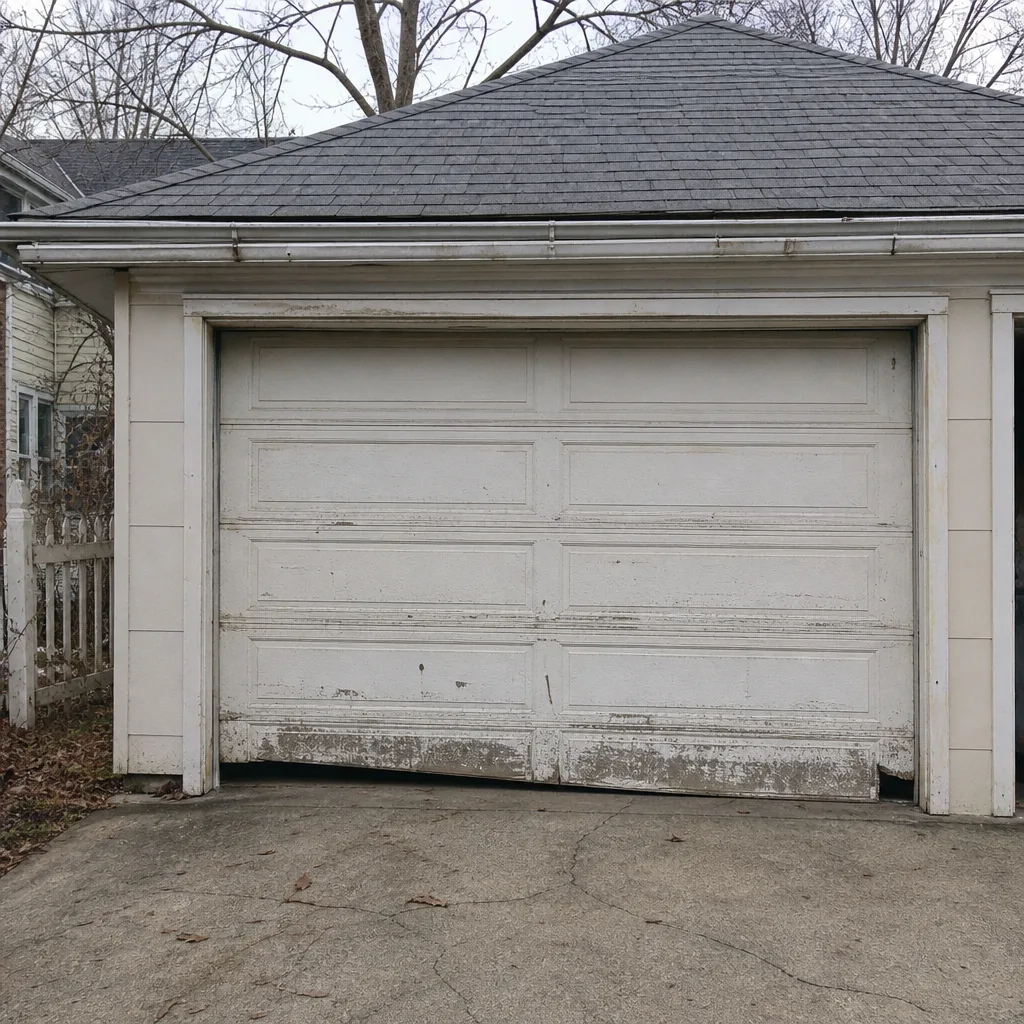 Before
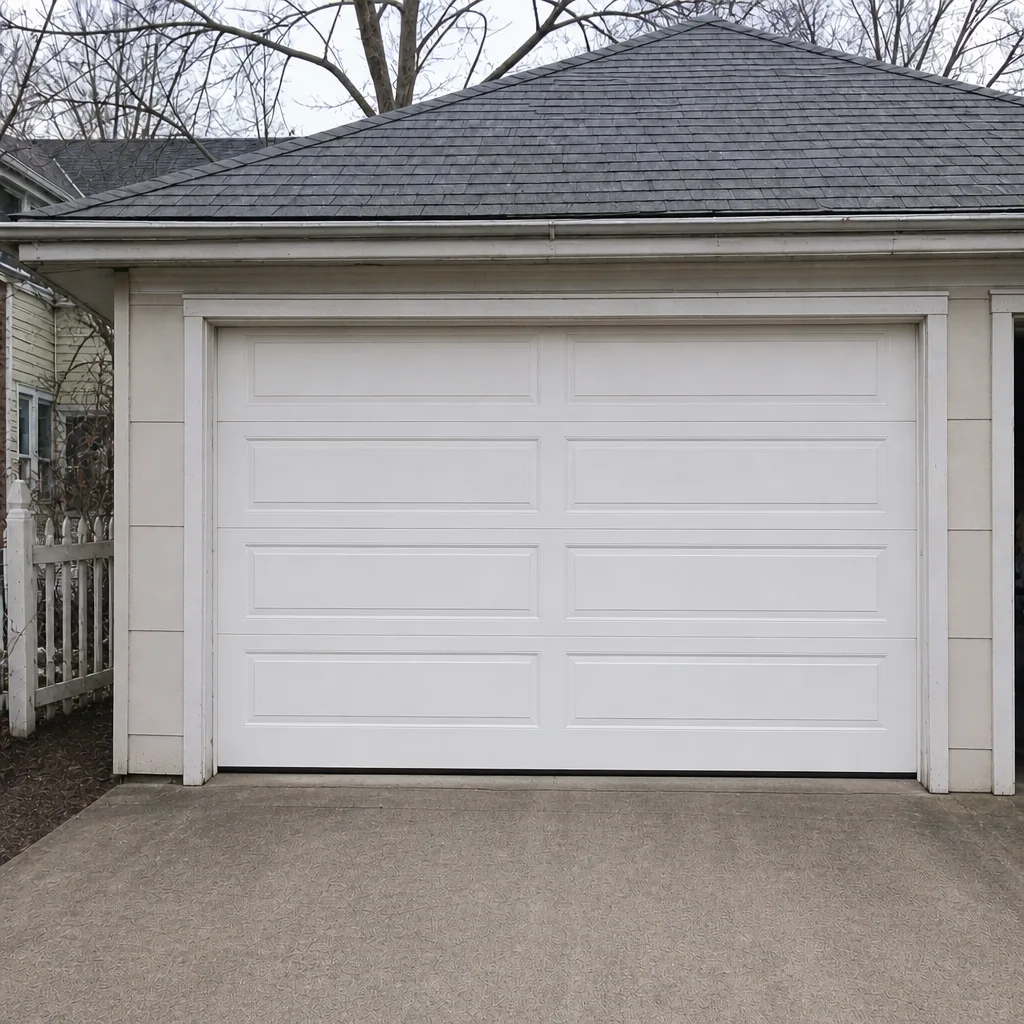 After
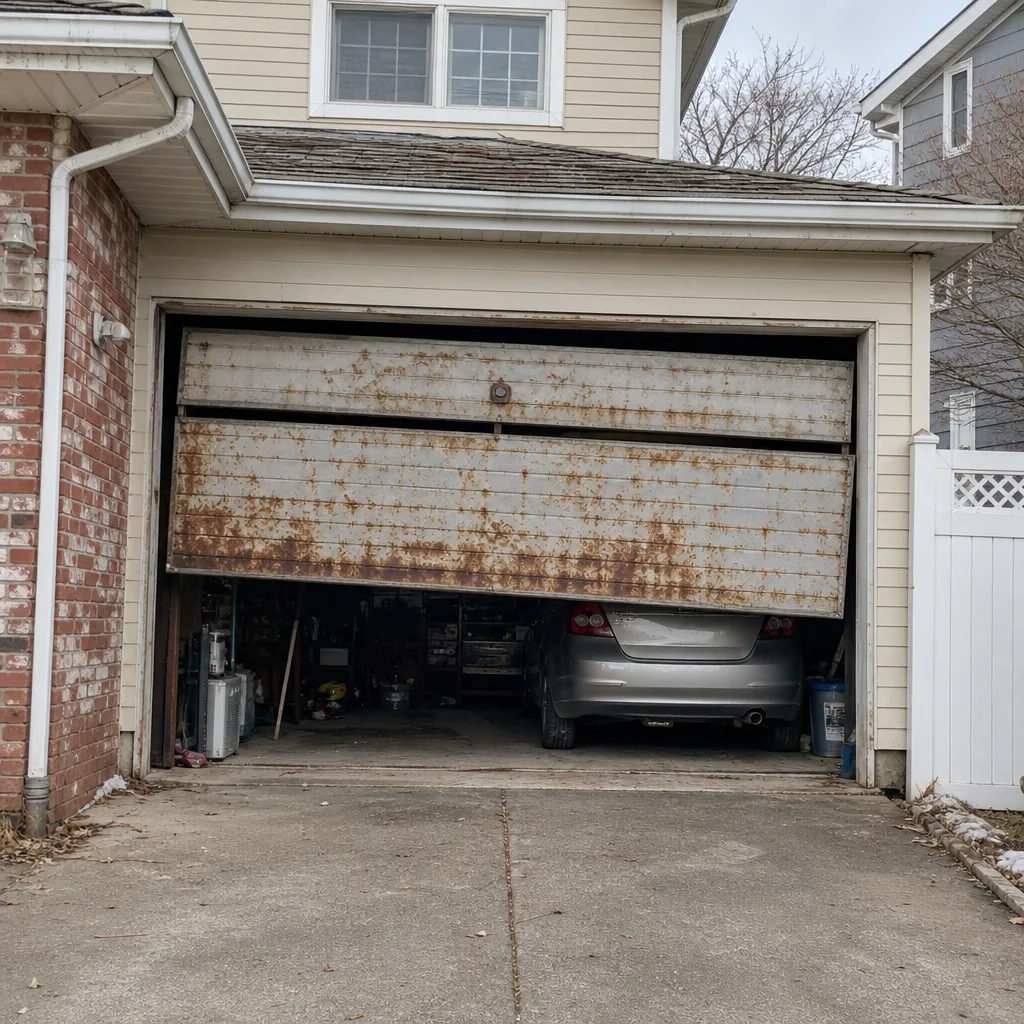 Before
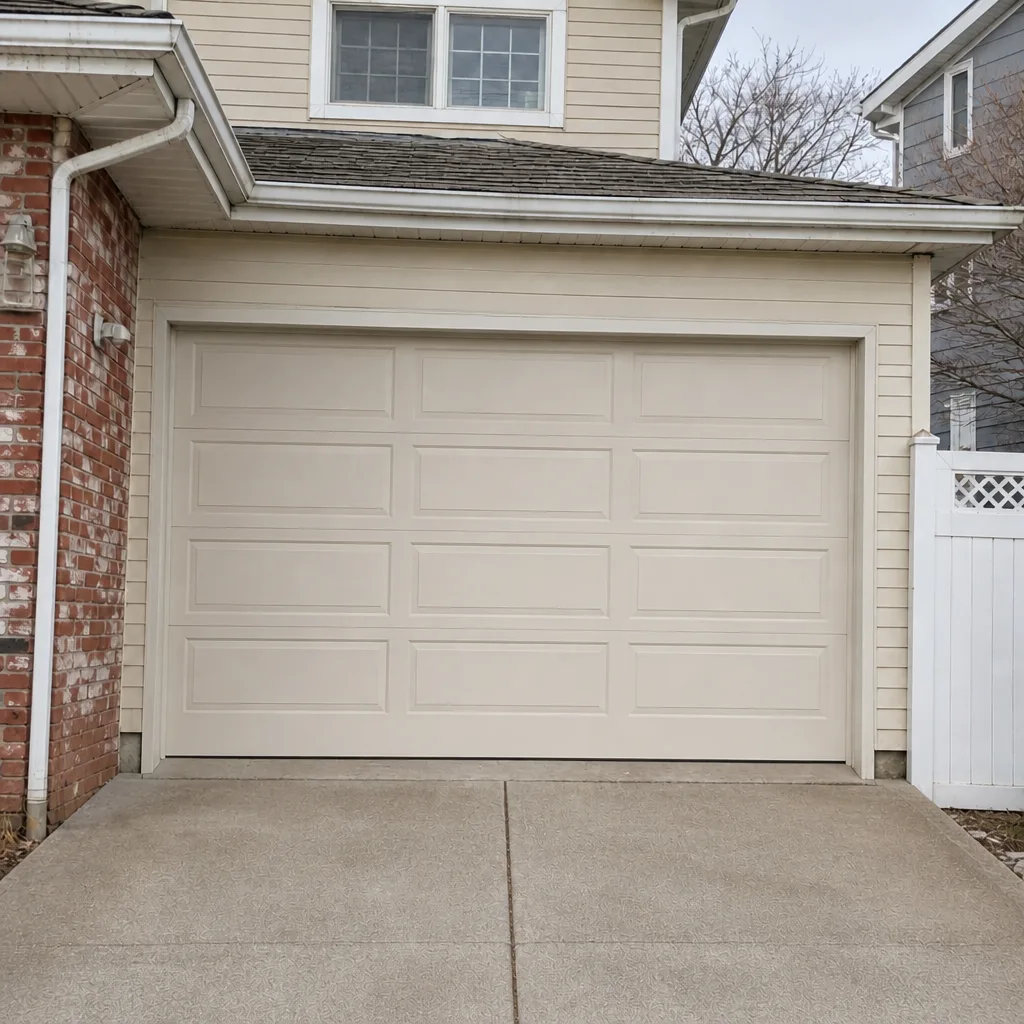 After
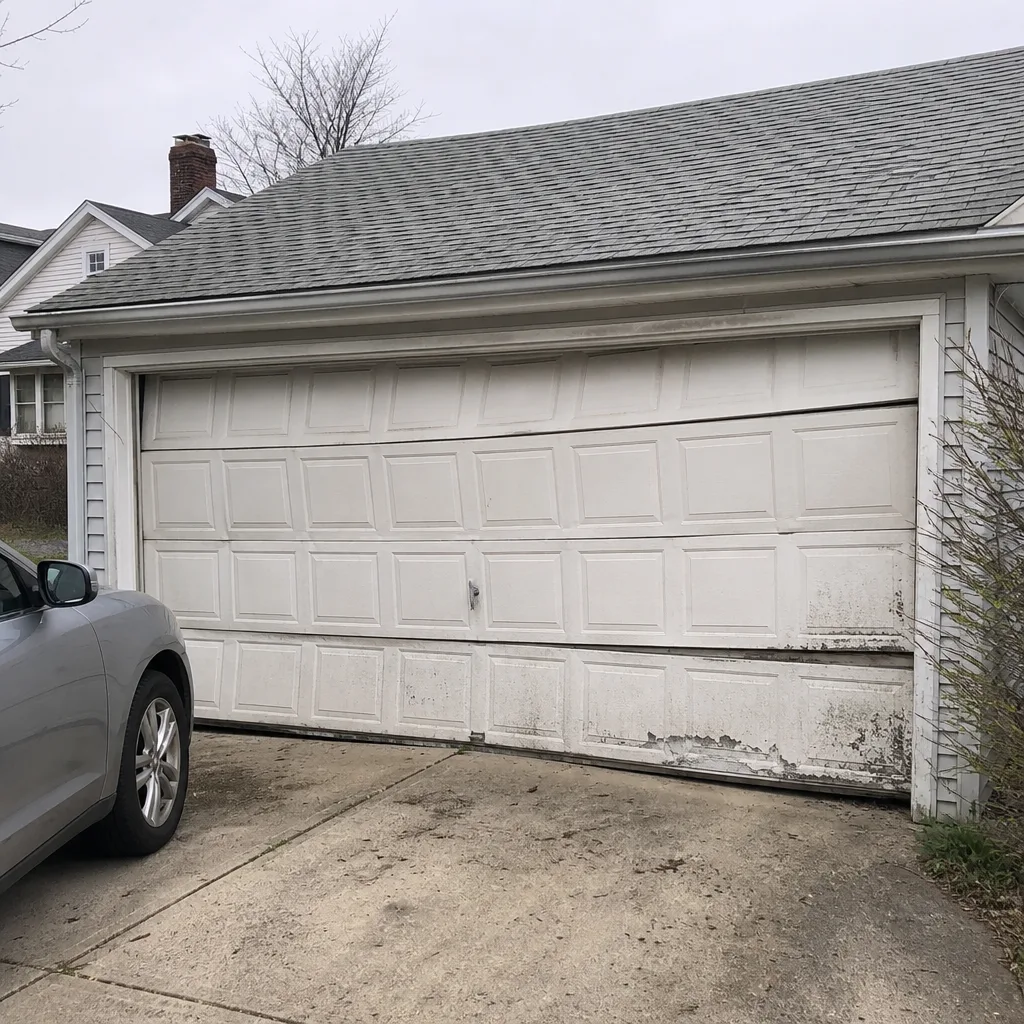 Before
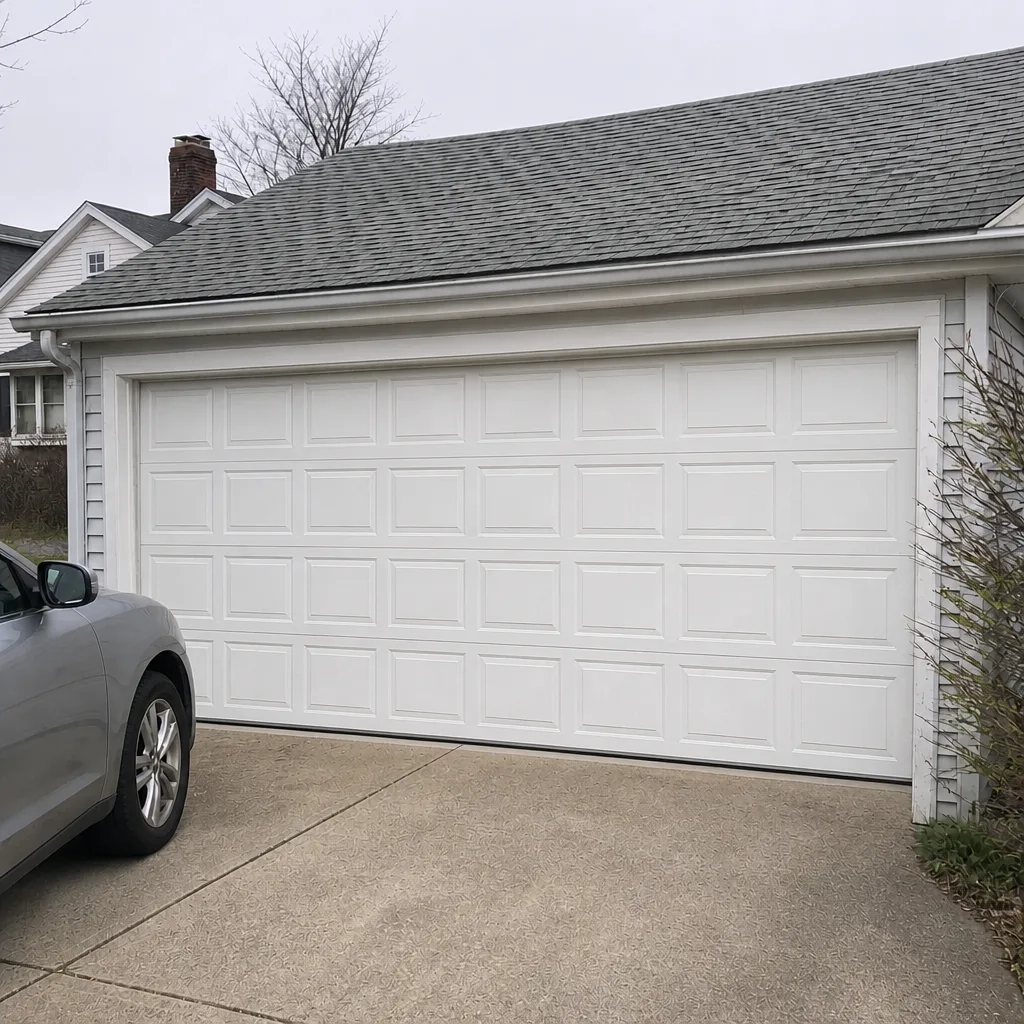 After
When to Call a Professional
Call a technician for anything involving springs, cables, drums, or bottom brackets. Call immediately if you hear a loud bang from the garage and the door won’t lift, if a cable is frayed or hanging, if the balance test shows the door dropping quickly, or if the door is crooked in its tracks. Also call if the opener runs but the door doesn’t move, if the safety reverse fails its test, or if the door has started making grinding or scraping sounds that lubrication doesn’t fix. If you’re not sure whether it’s a maintenance item or a repair, it’s worth a call either way. Ridgewood Garage Door Repair offers free estimates in Ridgewood. Call (855) 692-0594. We answer 24/7. Fast dispatch from 7am to 7pm, Sunday through Friday. Our technicians have up to 11 years of experience, and the local pro is licensed and insured as their state requires. You’ll get a price quoted and agreed before any work starts.
Frequently Asked Questions
Twice a year as a baseline, in early spring and late fall, plus a third pass right before the first hard freeze if your garage is unheated. Use lithium-complex grease or silicone spray on hinges, rollers, and the spring coil, and keep lubricant off the tracks. Call (855) 692-0594 for an exact quote on any repair the lubrication reveals. Estimates are free.
No. Springs store enough energy to cause serious injury, and the tools and feel involved in winding them take real training. A torsion spring that releases under load can break bones. Springs are one of the few garage door jobs that should always go to a trained technician. Call (855) 692-0594 if a spring has failed or the balance test shows tension loss. Estimates are free.
The most common cause is skipped lubrication on hinges in an unheated detached garage, which lets the hinges seize over a winter and starts the door fighting its own opener. Alley grime mixing with old lubricant, and low-headroom hardware that runs closer to its stress limits, both speed the failure up. The checklist above is built around all three.
Run the 30-second balance test: disconnect the opener, lift the door by hand to about halfway, and let go. A balanced door holds its position. A door that drops quickly has springs losing tension. Visible gaps in a torsion spring, or an extension spring that’s lost its shape, are also signs it’s time to call. Call (855) 692-0594 for an exact quote on a spring inspection. Estimates are free.
The price is quoted and agreed before any work starts, so the number you agree to is the price. A written estimate sets the final price for the job. If a technician finds something that wasn’t visible during the estimate, they’ll tell you before doing anything, and you decide whether to go ahead. No surprise invoices.
The local pro we connect you with is licensed and insured as their state requires, and our technicians have up to 11 years of experience. We work on eight major brands, including Clopay, Amarr, Wayne Dalton, and Craftsman, so the tech diagnoses what’s actually on your door rather than working around an unfamiliar system. Call (855) 692-0594 to book. Estimates are free.
The Bottom Line
Garage door maintenance comes down to a small number of habits done consistently: lubricate hinges, rollers, and springs twice a year with the right product, do a monthly visual check, run the 30-second balance test each season, and keep a log. In Ridgewood, the late-fall lubrication pass matters most, because an unheated garage in a temperature swing will seize a dry hinge over one winter. Springs, cables, and drums stay off the DIY list. Everything else is within reach. A door that’s maintained runs quieter, lasts longer, and gives you warning before a failure. When something crosses the line into repair, a specialist handles it end to end, so you’re not handed off to a second contractor. Ridgewood Garage Door Repair covers repair, opener work, spring replacement, and installation. Call (855) 692-0594 for a free estimate. We answer 24/7. Fast dispatch from 7am to 7pm, Sunday through Friday.
Written by the team at Ridgewood Garage Door Repair.